Claudine Gay
Introduction
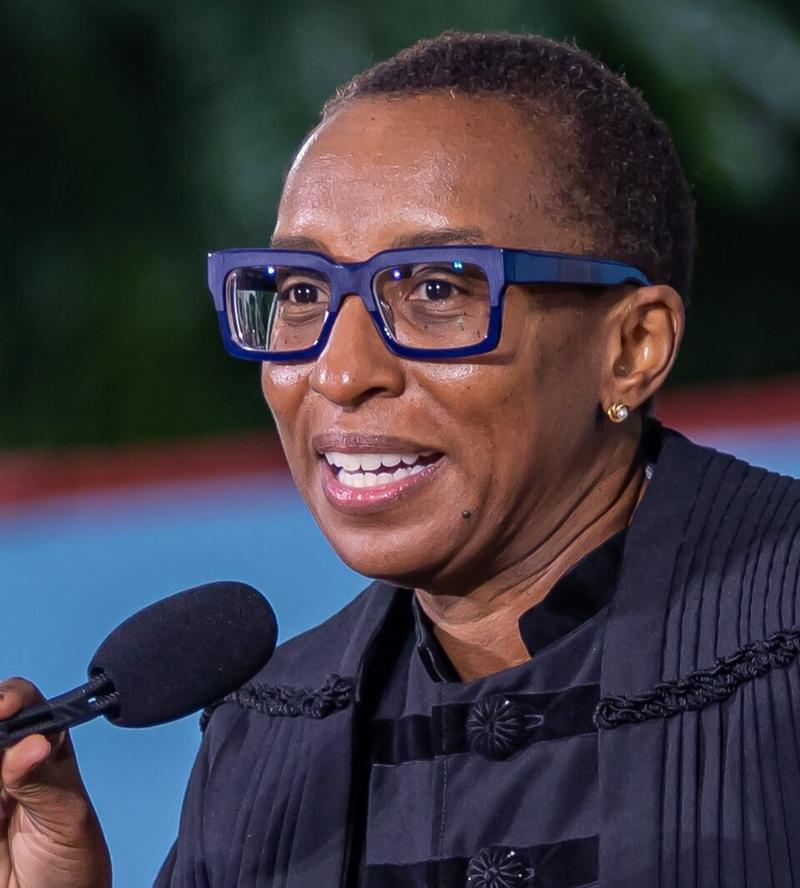
Claudine Gay, the first Black president of Harvard University, resigned on January 2, 2024, just months into her tenure, announcing her departure in a letter to the Harvard community amid plagiarism accusations and criticism over her testimony at a congressional hearing where she was unable to say unequivocally that calls on campus for the genocide of Jews would violate the school’s conduct policy.
Background Information
Gay was born on August 4, 1970, in New York City and grew up there; her parents were international students from Haiti who met in New York City as college students in 1967. She graduated from Stanford University in 1992 with a degree in economics, receiving the Anna Laura Myers Prize for the outstanding thesis in economics, and earned a PhD in government from Harvard in 1998, winning the university’s Toppan Prize for the best dissertation in political science.
Gay joined the Harvard faculty as a professor of government in 2006 and was appointed professor of African and African American studies in 2007. She served as dean of the Faculty of Arts and Sciences from 2018 to 2023 and became Harvard’s 30th president in July 2023, making history as the first Black person and the second woman to lead the university.
The Controversy or Incident That Led to Their Cancellation
Gay’s presidency was overtaken by two converging controversies. The first followed the October 7, 2023, Hamas attack on Israel and the ensuing wave of pro-Palestinian protests on American campuses, which put university leaders under intense political pressure over antisemitism. On December 5, 2023, Gay testified alongside the presidents of MIT and the University of Pennsylvania before the House Committee on Education and the Workforce. When Representative Elise Stefanik asked whether “calling for the genocide of Jews” would violate Harvard’s code of conduct, Gay responded: “It can be, depending on the context.”
The second controversy was academic. Gay faced plagiarism allegations raised by conservative activist Christopher Rufo and journalist Aaron Sibarium and by an anonymous complaint, covering alleged instances of inadequate attribution spanning eight of her academic works, including her dissertation and five of her eleven published articles. A Harvard review announced on December 12 found “a few instances of inadequate citation” and “duplicative language without appropriate attribution” in her work but “no violation of Harvard’s standards for research misconduct.” The same day, the board of the Harvard Corporation said it “unanimously” supported Gay’s leadership.
Gay called the allegations “demonstrably false” and threatened to sue a newspaper for libel, but further reporting kept the story in the headlines, and the pressure did not abate. On January 2, 2024, she resigned.
Public Reaction and Consequences
In her letter to the Harvard community, Gay wrote that “it has become clear that it is in the best interests of Harvard for me to resign so that our community can navigate this moment of extraordinary challenge.” She added that it had been “distressing to have doubt cast on my commitments to confronting hate and to upholding scholarly rigor — two bedrock values that are fundamental to who I am — and frightening to be subjected to personal attacks and threats fueled by racial animus.”
Supporters saw her ouster as a right-wing campaign against a Black woman who had become a symbol of diversity in higher education, while critics argued that her testimony and scholarly record had made her position untenable. The fallout extended beyond Harvard: University of Pennsylvania president Liz Magill, who testified alongside Gay, resigned the following week.
Current Status
After her resignation, Gay returned to the faculty at Harvard, where she holds a tenured professorship in government and African and African American studies. Alan Garber, Harvard’s provost, was named interim president while the university searched for a permanent successor. In a statement following her departure, Gay said she would “return to my guiding truth, which is that calls for violence against our Jewish community — threats to our Jewish students — have no place at Harvard, and will never go unchallenged.”
Impact on Their Career/Life
Gay’s six-month presidency was among the shortest in Harvard’s history and ended with her scholarly integrity under formal dispute: the university’s own review had found citation problems in her work even as it cleared her of research misconduct. Her resignation became a landmark moment in the national debate over campus antisemitism, free speech, and diversity initiatives, and it intensified scrutiny of how universities respond to political pressure.
For Gay personally, the episode transformed her from a respected political scientist and administrator into a national flashpoint, subject to personal attacks that she said were “fueled by racial animus.” She remains on Harvard’s faculty, but her presidency — and the circumstances of its end — continue to define her public reputation.