Nadhim Zahawi
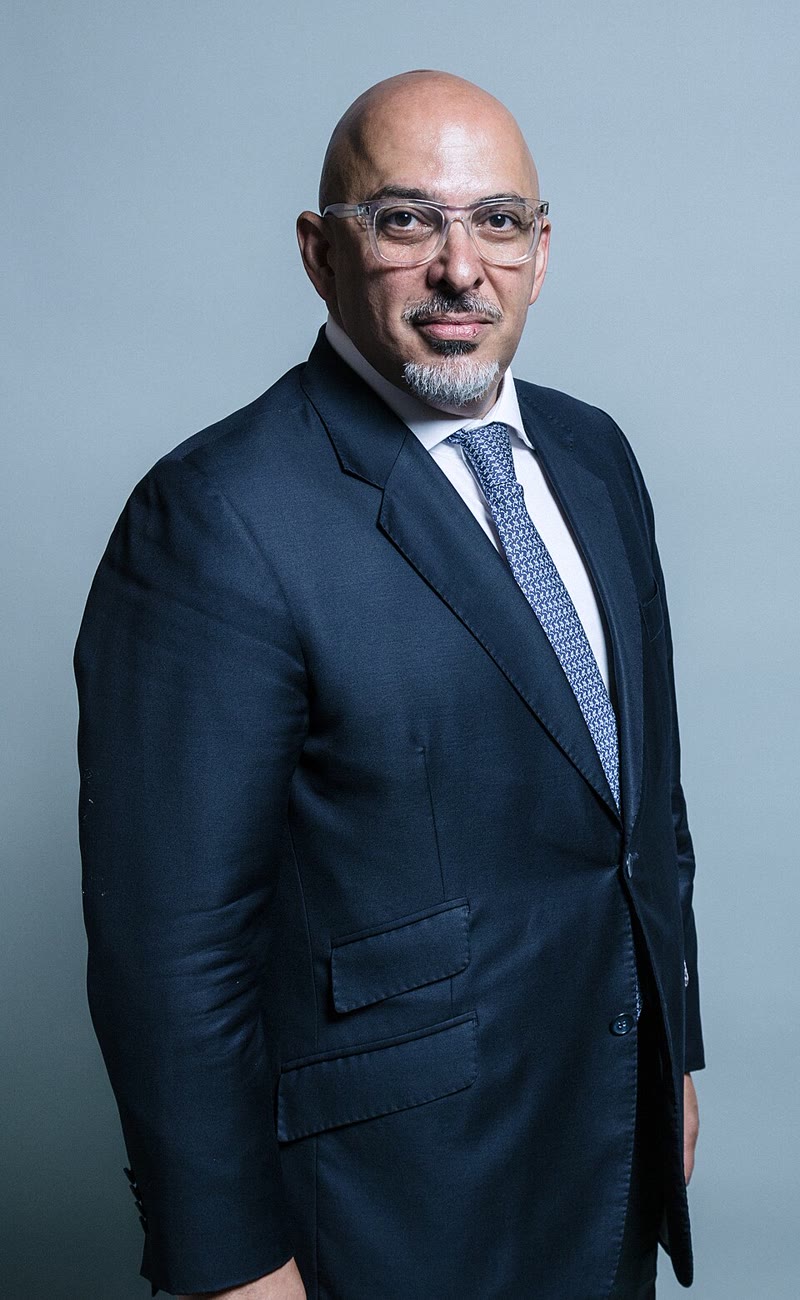
Introduction
Nadhim Zahawi is a British politician of Iraqi-Kurdish origin who rose rapidly through the ranks of the Conservative Party to hold a sequence of senior posts across the governments of Theresa May, Boris Johnson, Liz Truss and Rishi Sunak, including Chancellor of the Exchequer, Secretary of State for Education and Chairman of the Conservative Party. On 29 January 2023, he was dismissed from the government after the Prime Minister’s ethics adviser, Laurie Magnus, concluded that he had breached the Ministerial Code by failing to disclose that he was the subject of an HMRC investigation and had agreed to pay a multimillion-pound tax settlement. The case became a high-profile example of a senior minister being removed over a failure to declare a personal financial matter that the government’s own rules required to be disclosed, rather than over a matter of policy or conduct in office. He later announced he would stand down as a Member of Parliament, and in January 2026 he defected to the Reform UK party.
Background Information
Born on 2 June 1967, Zahawi is the son of Iraqi-Kurdish parents who came to the United Kingdom, and he was educated in Birmingham before working in the technology and investment sectors, including as a partner in a private-equity firm. He was elected as a Member of Parliament in 2017 and joined Theresa May’s government as Parliamentary Under-Secretary of State for Children and Families in the 2018 reshuffle. He went on to hold a sequence of ministerial posts. He served as Secretary of State for Education from September 2021 to July 2022, and was promoted to Chancellor of the Exchequer on 5 July 2022 following the resignation of Rishi Sunak — a role he held for less than 48 hours before being removed when he withdrew his support for Boris Johnson. He then served as Chancellor of the Duchy of Lancaster in the short-lived Liz Truss government, and as Chairman of the Conservative Party and minister without portfolio under Rishi Sunak from October 2022. Per Wikipedia, his background in the financial and technology sectors was directly relevant to the later tax controversy, which concerned the sale of shares in the polling firm YouGov. Officials of the Cabinet Office’s propriety and ethics team had alerted the prime minister of an HMRC “flag” concerning his tax affairs before his 2022 appointment to the Treasury. His career was marked by rapid advancement and an increasing profile at the top of the government.
The Controversy or Incident That Led to Their Cancellation
The controversy centred on Zahawi’s tax affairs and his failure to disclose an ongoing matter to the government’s ethics adviser. In 2022, Zahawi reached an in-principle agreement with HMRC, including a penalty, over a tax dispute connected to the sale of multiple tranches of shares in YouGov, a company in which he had held a significant interest. The Guardian reported in January 2023 that the tax due was estimated at about £3.7 million, and that HMRC had applied a 30 percent penalty, bringing the total to roughly £4.8 million. The core of the case, as set out in the Guardian’s timeline, was that Zahawi failed to declare the HMRC investigation or the penalty to the Prime Minister’s ethics adviser at several points when he was appointed to, or continued in, ministerial roles — including when he was made chair of the Conservative Party in October 2022. The adviser concluded that the matter “requires declaration and discussion” and was “a relevant interest which could give rise to a conflict,” particularly for a Treasury minister. The row came to a head on 29 January 2023, when Zahawi was sacked from his posts.
Public Reaction and Consequences
The dismissal was swift and absolute. On 29 January 2023, Zahawi was removed from his roles as Conservative Party chairman and minister without portfolio after Magnus advised that he had breached the Ministerial Code. The decision drew wide coverage and debate about the standards applied to ministers. Zahawi maintained that his tax affairs “were and are fully up to date and are paid in the UK,” a position his spokesperson had provided to the BBC’s Newsnight programme in January 2023. The case was significant because it involved a senior minister being removed not over a matter of policy or conduct in office, but over a failure to make a required disclosure about a personal financial matter — a breach of the rules governing ministerial interests. The episode was also discussed in the context of the broader scrutiny of the conduct and disclosures of senior Conservative figures.
Current Status
Following his departure from government, Zahawi became a backbencher, and in April 2023 he was reselected for the next general election. His position at home grew more contestable in 2023, when a figure in his local Conservative Association resigned from its executive intending to challenge him. On 9 May 2024, Zahawi announced that he would stand down as a Member of Parliament at the next election. As of the sources reviewed, his time as a Conservative MP had ended, and in a striking subsequent turn, his defection to the Reform UK party was announced by Nigel Farage on 12 January 2026 — Zahawi citing, among other reasons, free-speech concerns as part of why he was joining. The tax settlement itself had been resolved, and he had maintained throughout that his tax affairs were in order, though the breach of the Ministerial Code over the non-disclosure remained the defining fact of his fall from government.
Impact on Their Career/Life
The immediate consequence was the loss of all of Zahawi’s government posts, ending a rapid rise that had taken him from the backbenches to the most senior levels of the Conservative government. The case was significant in two ways: first, it removed a high-profile minister over a disclosure breach rather than a matter of conduct or policy, and second, it foreshadowed the end of his front-line Conservative career, since he subsequently announced he would not seek re-election and ultimately defected to a different party. For the wider discussion of ministerial standards, the Zahawi case became a touchstone for the argument that senior officials’ personal financial matters — when they involve large tax settlements or investigations — require clear and timely disclosure, and that failure to do so can cost a minister their position even where the underlying tax has been paid.