Laurent Freixe
Introduction
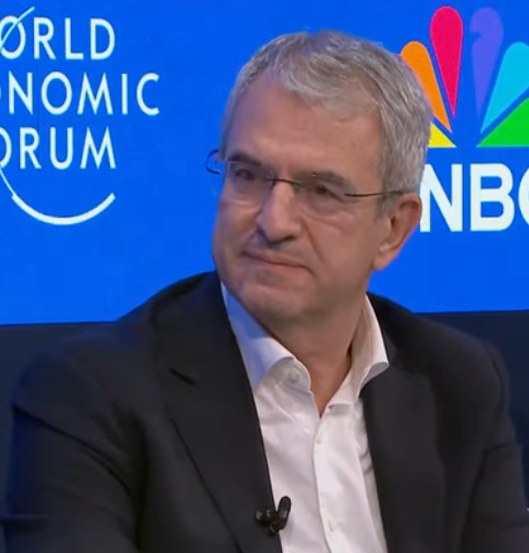
Laurent Freixe is a Nestlé lifer — roughly four decades at the Swiss food giant that makes Kit Kat chocolate bars and Nespresso coffee capsules — who reached its top job in September 2024 and lost it exactly one year later. On 1 September 2025 the company announced that its chief executive had been dismissed “with immediate effect” following an investigation into an undisclosed “romantic relationship” with a “direct subordinate” which, Nestlé said, breached its code of business conduct. The inquiry was led by the company’s chair and lead independent director with the support of independent outside counsel, and the BBC reported that it was triggered by a report made through Nestlé’s own whistleblowing channel. Reuters described the removal as ousting the company’s second CEO in a year and throwing the Swiss food giant into the deepest leadership chaos in decades.
Background Information
Freixe had spent 39 years at Nestlé by the time of his dismissal, and stepped up to the global chief executive role in September 2024, replacing Mark Schneider — who had himself been axed for underperformance. His exit made him the second CEO out within a year at the world’s biggest packaged food company, which has seen slowing sales in its main businesses since the pandemic. The company’s shares, a bedrock of the Swiss stock exchange, had lost almost a third of their value over the previous five years, underperforming European peers, and shed a further 17 per cent during Freixe’s own leadership. In July 2025, weeks before his dismissal, Nestlé launched a review of its underperforming vitamins business that could lead to the divestment of some brands, after first-half sales volumes missed expectations.
The Controversy or Incident That Led to Their Cancellation
Allegations. The claims in this section stem from internal investigations by Nestlé, which reported substantiating the relationship after a second, externally supervised probe. The conduct was never criminally charged or adjudicated in court, and Freixe denied the relationship throughout both investigations.
Concerns about a possible relationship between Freixe and an employee were raised by staff earlier in 2025 via the company’s internal hotline — its whistleblowing channel. An initial internal investigation found the claims unsubstantiated, according to Financial Times reporting cited by the BBC; Reuters, citing a company spokesperson, reported that Freixe had initially denied the relationship to the board. When the complaints persisted, Nestlé ordered a second investigation, overseen by chairman Paul Bulcke and lead independent director Pablo Isla with the support of independent outside counsel — the Swiss lawyers Baer & Karrer, according to Swiss media. That externally supervised probe upheld the claims, the Financial Times’ reporting states. The relationship was with an employee who is not on Nestlé’s executive board, and the investigation began because it represented a conflict of interest, the BBC has learned. A Nestlé spokesperson subsequently confirmed: “Laurent Freixe denied the relationship throughout the course of both investigations.”
Public Reaction and Consequences
Nestlé’s shares were down about one per cent following the announcement, a comparatively muted market reaction to what Reuters described as one of the most turbulent periods in the company’s 159-year history. “The loss of two CEOs and a chairman in a year is of historic proportions for Nestlé,” said Ingo Speich, head of corporate governance and sustainability at Deka, a top-30 Nestlé investor. “The new CEO needs to fix the business model and bring volumes back.” Analysts said the ouster was unlikely to reassure investors, noting it was the second time in a year the company had appointed a new boss without a thorough search, and JPMorgan warned the change could “keep a lid on the equity story” until the new chief executive set out his plan. Maurizio Porfiri, chief investment officer at trading firm Maverix, said “the market did not particularly like Freixe” and that “another fresh start is needed”. The dismissal featured on the front page of Swiss newspapers, with the Neue Zürcher Zeitung noting that Nestlé had lost its “legendary stability”, under which CEOs stayed for years.
Current Status
Freixe’s dismissal took effect immediately on 1 September 2025, and Nestlé confirmed that after 39 years with the company he will receive no exit package. He was replaced the same day by Philipp Navratil, the Nespresso chief, who has been with Nestlé since 2001. In a short statement, chair Paul Bulcke said: “This was a necessary decision. Nestlé’s values and governance are strong foundations of our company. I thank Laurent for his years of service at Nestlé,” adding that the company was “not changing course on strategy and we will not lose pace on performance”. A company spokesperson said: “We acted at all times in line with best practice corporate governance,” adding that the decision showed Nestlé was “taking allegations and investigations seriously”. The churn at the top is set to continue: Bulcke steps down as chair in 2026, with Isla, the former boss of Zara-owner Inditex, proposed as his replacement.
Impact on Their Career/Life
The dismissal ended Freixe’s 39-year Nestlé career overnight, cost him any exit package, and cut short a tenure that had lasted exactly one year. He was not immediately available to comment when contacted via email, Reuters reported, and the BBC said it had contacted him for comment. His case joins a small group of corporate leaders removed over workplace relationships: BP chief executive Bernard Looney quit after admitting he was not “fully transparent” initially, and McDonald’s fired Steve Easterbrook in 2019 after finding he had a consensual relationship with an employee. At Nestlé, the affair capped twelve months in which the company lost two CEOs and its longstanding chair announced his departure, and it left Freixe’s successor — the second boss installed without a thorough external search in a year — with the task of restoring the “legendary stability” that Swiss commentators said had been lost.