Buddy Stephens
Introduction
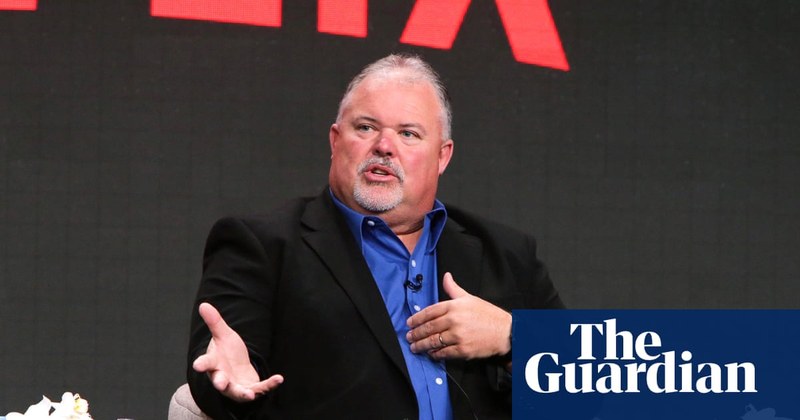
Buddy Stephens is an American junior-college football coach who spent 18 years as head coach at East Mississippi Community College (EMCC), won five national championships there, and became a national television figure as the star of the first two seasons of Netflix’s documentary series Last Chance U. His tenure ended in September 2026, when EMCC let him go days after he publicly called leaders of the Mississippi Association of Community Colleges Conference (MACCC) “idiots” over changes to the league’s schedule and playoff format. The school announced his exit in a statement that never mentioned his name and gave no reason, while its president publicly disavowed the remarks. It was, by all accounts, a firing over public criticism alone — no misconduct allegation, no legal case — a coach terminated for openly trashing his own school and league hierarchy.
Background Information
Stephens built EMCC into a junior-college powerhouse across an 18-season run that began long before his television fame. He won five national titles with the Lions between 2011 and 2018; The Big Lead lists the championship seasons as 2011, 2013-14, and 2017-18, while the Guardian counts five titles in that span, and the New York Post describes him as a five-time national junior college champion. His rosters sent players to the NFL, including defensive tackle Jarran Reed of the Seattle Seahawks, linebacker Dakota Allen, who played four professional seasons for various teams, and defensive end Za’Darius Smith of the Atlanta Falcons. National fame arrived through Last Chance U, the Netflix documentary that followed EMCC players as they juggled academics, challenging home lives, and football in their efforts to reach the NFL. The series ran for five seasons between 2016 and 2020, later shifting to Independence Community College in Kansas and then Laney College in Oakland, and Stephens headlined the first two, in which he and his players came close to a national championship appearance.
The Controversy or Incident That Led to Their Cancellation
The trouble began at EMCC’s football media day, days before the firing, where Stephens gave an interview to The Commercial Dispatch, the local newspaper, and tore into the MACCC’s restructuring of its season. The conference had decided to increase the number of regular-season games from nine to ten, giving each team five home and five away games, and to cut the playoff field from four teams to two; previously the top two teams from the North and South divisions made the playoffs, while under the new format the top seeds from each division will square off for the state title. Stephens did not disguise his contempt for the people behind it. “They’re idiots,” he said. “We wouldn’t have won two national championships because we were the second-place team in the North. It’s not a very well thought-out process,” he told the paper. “It was really ‘junkified,’ the way they decided they were going to do it and there wasn’t a lot of real thought. I was very surprised at how it came out because there were actual people who have doctorates that came up with this.” He added that he believed the changes were a money-based decision by school presidents who did not want to travel for national playoff games and who had concocted a scenario in which they were much more likely to host one.
Public Reaction and Consequences
The consequences landed within days. EMCC announced Stephens’s exit on Monday night, September 1, 2026, in a statement that made no mention of the coach who had led the program for 18 seasons and provided no reason for the split; it named Preston Rice, the associate head coach and offensive coordinator, interim head coach “effective immediately,” with the Guardian reporting the appointment was “for the remainder of the season.” EMCC president Scott Alsobrooks followed with a post to the college’s Facebook page that never named Stephens but clearly alluded to him, writing that the institution “strongly disavows the remarks published in a recent article.” “While the college supports open and constructive dialogue, personal attacks have no place in that discourse and are contrary to the standards we uphold within our college community,” Alsobrooks said, adding that the comments “are inconsistent with the college’s core values and standards of professionalism, respect, and civility and do not reflect the views, mission, or expectations of EMCC.” The college, he wrote, “sincerely apologizes for the concerns raised by these comments and remains committed to fostering a respectful, professional, and collegial environment for all.”
Current Status
The firing stands, and Rice has taken over the Lions, who were scheduled to return to action Thursday evening for their home opener against Hinds. Stephens, who had led EMCC to a season-opening win at Southwest Mississippi Community College on August 27, did not immediately comment publicly on his dismissal. No legal action, contract dispute, or accusation of wrongdoing accompanies the separation in any of the reporting; the split rests entirely on what he said about his conference. Whether EMCC will buy out the remainder of his contract, and what Stephens intends to do next, had not been reported as of the coverage announcing his departure.
Impact on Their Career/Life
The collapse was strikingly fast: a head coach with 18 years of tenure, five national championships, and a national profile built on a hit Netflix series lost his job within days of a single media-day interview. The school he defined for nearly two decades announced his departure without using his name, and its president publicly characterized his comments as personal attacks inconsistent with the college’s values. The episode also recast his legacy in the public eye — the brash outspokenness that made him a compelling documentary figure is the same trait that ended his run, a tension the coverage itself drew out. What remains untouched by the controversy is his on-field record, and what remains unsettled is everything else: his next job, his standing in junior-college football, and whether the 2026 firing becomes a footnote or a turning point in a long coaching career.