Alex Saab #
Introduction #
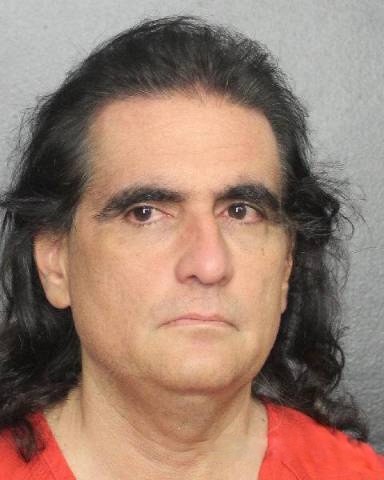
Alex Saab, the Colombian-born businessman who became one of Nicolás Maduro’s closest financial operators and later a minister in his government, is expected to plead guilty on September 15, 2026, in a federal money-laundering case in Miami. According to court records, Saab is scheduled to appear before U.S. District Judge Kathleen Williams for a change-of-plea hearing in a case that accuses him of bribing Venezuelan officials to win lucrative food-import contracts at a time of widespread hardship; the details of the plea had not been made public, and his attorney, Neil Schuster, declined to comment. U.S. officials have long described Saab as Maduro’s “bag man,” and his reversal — from a prisoner Caracas campaigned to free to a defendant expected to admit guilt — is one of the starkest downfalls in the ousted leadership’s inner circle.
Background Information #
Born Alex Nain Saab Morán on December 21, 1971, in Barranquilla, Colombia, Saab is the son of a Lebanese immigrant father who settled in the city and built a textile business, and he attended the elite German School of Barranquilla before going into business himself. His fortune began with Venezuelan government work: in November 2011, his Bogotá-based company Fondo Global de Construcción signed an agreement that produced a contract worth roughly US$685 million for prefabricated homes in Venezuela. In 2017, then–Venezuelan attorney general Luisa Ortega Díaz alleged that Saab was co-owner of Group Grand Limited, a Mexican firm that supplied food to the government’s CLAP food-distribution program alongside Álvaro Pulido and another partner she claimed was “presumably President Nicolás Maduro,” with food allegedly sold at a 112 percent markup — claims that were never adjudicated. His companies also won major state contracts elsewhere: in August 2015, the Swiss-based trucking and trading firm Trenaco, which executives said Saab ran, won a contract from Venezuela’s state oil company PDVSA. After the downfall of the government he served, his ministerial career formally ended — he had been appointed Venezuela’s Minister of Industry and National Production in October 2024 and removed from the role in January 2026 — and he holds Colombian citizenship by birth along with Antiguan and, formerly, Venezuelan citizenship.
The Controversy or Incident That Led to Their Cancellation #
Allegations and pending charges. The conduct described in this section is drawn from a federal indictment and prosecutors’ allegations. Saab was expected to change his plea to guilty at a hearing on September 15, 2026, but as of this writing no conviction has been entered, and under U.S. law he remains presumed innocent until that happens. His earlier 2020–2023 prosecution ended without any adjudication of guilt: he was released in a prisoner exchange and pardoned before trial.
The U.S. first charged Saab during the first Trump administration in 2019. In June 2020 he was arrested in Cape Verde when his plane stopped to refuel on what the Venezuelan government described as a high-level humanitarian mission to Iran; Maduro’s government appointed him ambassador to the African Union that December in an effort to block his extradition, and Venezuela’s foreign ministry insisted he had been employed to obtain food, medicine and other humanitarian goods. He was extradited to the United States in October 2021 and spent more than two years in federal custody in Miami. In December 2023 he was released and returned to Venezuela in exchange for ten American prisoners, and President Joe Biden pardoned him as part of the deal — a swap the Biden White House hoped would lure Maduro toward a free election.
The pardon was narrowly tailored, and federal investigators immediately began examining alleged crimes it did not cover. In the new case, prosecutors allege a conspiracy to create fake companies, falsify shipping records and skim from government contracts to import food from Colombia and Mexico under the CLAP program, and allege that Saab and others expanded their influence deep inside the Maduro government, gaining access to billions of dollars in oil sales from PDVSA. Saab was detained in Venezuela in February 2026 after the U.S. operation that captured Maduro, deported to the United States on May 16, 2026, and formally pleaded not guilty on July 24, 2026, before U.S. District Judge Lauren F. Louis on money-laundering and related financial charges. Four months after his deportation, court records showed the change-of-plea hearing that set up his expected admission of guilt.
Public Reaction and Consequences #
The 2023 prisoner deal that freed Saab was harshly criticized by Republicans and federal law-enforcement officials at the time, and the swift new prosecution validated their complaint that the pardon had left serious alleged crimes unaddressed. In Venezuela, the government’s own posture flipped with power: Delcy Rodríguez, who as Maduro’s vice president had mounted an international campaign branding Saab an “innocent Venezuelan diplomat” who was “kidnapped” by the U.S., distanced herself from him after Maduro’s capture — firing him from her Cabinet and stripping him of his role as the main conduit for foreign companies investing in Venezuela. U.S. officials have said Saab could be asked to serve as a character witness against Maduro, who awaits trial on drug charges in Manhattan — a prospect that would make his guilty plea consequential well beyond his own case.
Current Status #
As of September 14, 2026, Saab is in U.S. custody at the Federal Detention Center in Miami, expected before Judge Kathleen Williams the following morning to plead guilty to a single count of money laundering; the charge carries no guaranteed sentence, and the terms of any plea agreement had not been disclosed. His case unfolds alongside the Trump administration’s broader overhaul of relations with Venezuela, which now centers on oil: this month Trump announced what he called the “BIGGEST OIL DEAL IN WORLD HISTORY,” a partnership with Venezuelan oil entrepreneur Alejandro Betancourt giving the U.S. government a stake and access to at-cost crude from fields with a potential to produce 65 billion barrels.
Impact on Their Career/Life #
Saab’s fall closes out a decade-long arc from shadow financier to statesman to federal defendant. The man Maduro once welcomed home as a hero and rewarded with a Cabinet post was fired by Maduro’s own successor-in-interest, stripped of his economic role, and deported by the government he served — and now stands to admit, in a Miami courtroom, to the core allegation the U.S. has pressed since 2019. A guilty plea would expose him to prison time that his 2023 pardon was specifically designed to prevent, and could make him the most senior insider to give U.S. prosecutors a window into how the Maduro government’s food-import and oil money moved.