Kamila Valieva
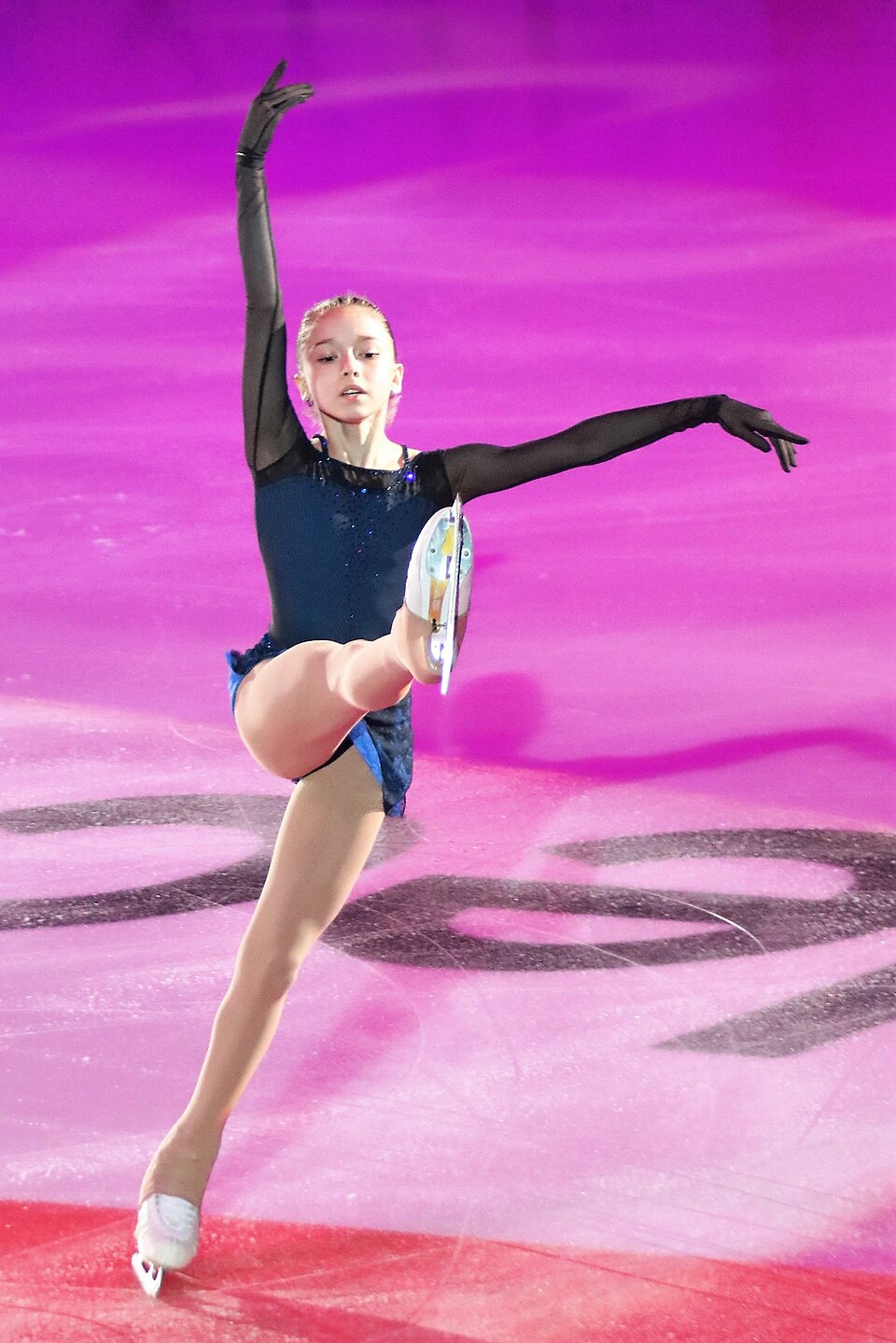
Introduction
Kamila Valieva, the Russian figure skater who arrived at the 2022 Winter Olympics as a 15-year-old world record holder and gold-medal favorite, received a four-year doping ban from the Court of Arbitration for Sport (CAS) on January 29, 2024. Backdated to December 25, 2021, the ban disqualified all her results from that date, including first-place finishes at the 2022 European Figure Skating Championships and the Olympic team event, costing the Russian Olympic Committee its team gold in favor of the United States. The controversy over her positive test for trimetazidine, revealed days after she helped Russia win gold in Beijing, dominated the 2022 Games.
Background Information
Valieva was born on April 26, 2006, in Kazan, Tatarstan, and began skating in 2009, joining Eteri Tutberidze’s group at Moscow’s Sambo-70 club in spring 2018. She won the 2020 World Junior Championships — only the second woman ever to land a quadruple toe loop in international competition — then set world records in the short program, free skate, and combined score at the 2021 Finlandia Trophy, Skate Canada International, and Rostelecom Cup. In January 2022 she became the first woman to break the 90-point barrier while winning the European Championships in Tallinn, and on January 20 she was named to the Russian Olympic team as the favorite to take gold in Beijing.
The Controversy or Incident That Led to Their Cancellation
The positive test came from a routine sample Valieva gave on December 25, 2021, after winning the Russian national championships. Analyzed at a WADA-accredited Stockholm laboratory, it tested positive for trimetazidine on February 8, 2022, a day after she helped the Russian Olympic Committee win the team event gold. Trimetazidine, a heart medication that increases the heart’s functionality, is prohibited in competition. The medal ceremony was postponed, the test was confirmed on February 11, and Valieva was provisionally suspended only to be cleared a day later by a RUSADA committee — a decision the IOC, ISU, and WADA immediately appealed.
At an expedited CAS hearing on February 13, Valieva’s mother testified that she took hypoxen for heart “variations,” and Valieva argued the result was “due to contamination with [her] grandad’s medicine.” A day later CAS declined to reinstate the suspension, ruling that keeping her out “would cause her irreparable harm in the circumstances” given her protected-person status as a minor, the untimely notification of the result, and her clean tests during the Games themselves. She placed first in the women’s singles short program on February 15, but a mistake-filled free skate dropped her to fourth as coach Eteri Tutberidze berated her — behavior IOC president Thomas Bach called a “chilling atmosphere” that left him “very, very disturbed.”
Public Reaction and Consequences
The decision to let her compete drew international criticism. US Olympic Committee CEO Sarah Hirshland said, “We are disappointed by the message this sends. This appears to be another chapter in the systemic and pervasive disregard for clean sport by Russia.” Bach told reporters that “doping is very rarely done alone with the athletes” and that “the ones who have administered this drug in her body, these are the ones who are guilty,” while Kremlin spokesman Dmitry Peskov called such criticism “deeply inappropriate.” The New York Times reported that her December sample also contained two permitted substances, hypoxen and L-carnitine, which USADA chief Travis Tygart called a “trifecta of substances” aimed at increasing endurance and reducing fatigue.
In January 2023, RUSADA stripped Valieva of her Russian national title, saying she had “no fault in the positive drug test,” but refused to strip the Olympic team gold — a decision widely suspected to be a “half-measure” to preserve Russia’s medal — prompting WADA to take the case to CAS. The ISU also raised the senior minimum age from 15 to 17 in the aftermath.
On January 29, 2024, CAS imposed the four-year ban, backdated to December 25, 2021, upholding WADA’s appeal after Valieva had been cleared by a Russian tribunal. In its 129-page report, the panel wrote that “the athlete did not discharge her burden of proving … that her Anti-Doping Rule Violations (ADRV) was not intentional,” and while it called Valieva “an honest, straightforward, and credible witness,” it found her explanation — that her grandfather crushed his trimetazidine on the chopping board used for her strawberry dessert — was “not corroborated by any concrete evidence.” The ISU then disqualified her from the 2022 European Championships and the Olympics: the United States was upgraded to team gold, Japan to silver, the Russian Olympic Committee demoted to bronze, and Canada, fourth in Beijing, appealed to CAS for the bronze.
Current Status
Valieva and Russian sports officials have appealed the CAS ruling to Switzerland’s supreme court, which can intervene only on limited grounds of abuse of legal process, and a fresh round of appeals over the reallocated team medals has no timetable. Her ban is set to expire in December 2025. WADA said the case left a “very unpleasant” taste because Valieva was the only person punished; president Witold Banka said, “We think the athlete didn’t take this substance alone, it was not her initiative,” adding “She faced the consequences,” with no sign that coach Eteri Tutberidze or her medical staff will be held to account in Russia. WADA wants rule changes before the 2026 Winter Olympics to strengthen investigations of athlete entourages. Valieva left Tutberidze’s group in October 2025 to train under Svetlana Sokolovskaya, intending to return to competition, but was not named to Russia’s team for the 2026 Winter Olympics.
Impact on Their Career/Life
The ban voided Valieva’s results from December 25, 2021, onward — her European title, Olympic team gold, Russian national title, and fourth-place finish in the Beijing singles event — though she still holds the women’s world records in the short program, free skate, and total score. The case postponed the team medal ceremony indefinitely and kept American and Japanese skaters waiting on their medals for more than a year. Valieva, who received the Order of Friendship from President Vladimir Putin in February 2022, has been the only person punished, despite the World Anti-Doping Code requiring that those working with underage athletes implicated in doping cases also be investigated. Her scandal became a stage play, “Quad Loop,” staged in Amsterdam and London, while she kept competing domestically as international events closed to Russian skaters.