Jack Murley
Introduction
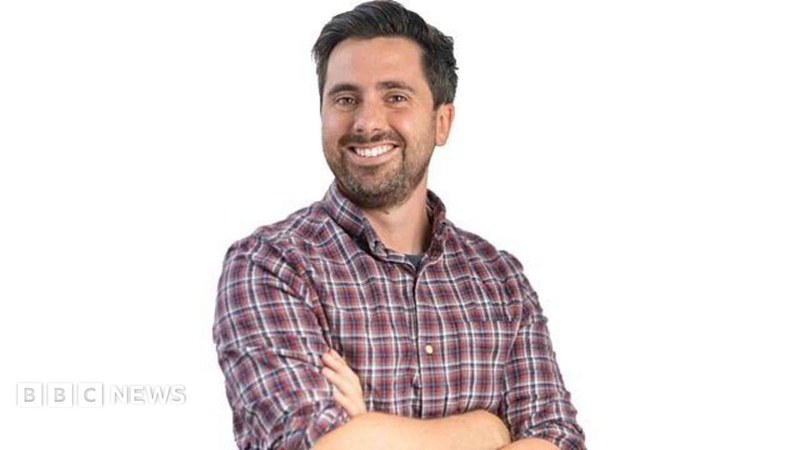
Jack Murley is a radio presenter from Bodmin in Cornwall who worked on BBC Radio Cornwall from 2019 until 2024, when the corporation sacked him for breaching its editorial and social media guidelines. His dismissal became a two-year legal and public reckoning: an employment tribunal in Exeter examined whether he had been discriminated against as a gay man and as a union representative, and found that he had not, while Murley’s separate account of homophobic abuse inside the BBC ended with the corporation issuing him a formal, full and unconditional apology. The case sits at the intersection of two stories — a presenter punished for publicly attacking his employer’s local radio restructuring, and a gay employee who said he was abused while the BBC failed to stop it.
Background Information
Murley had spent 13 years with the corporation by the time of his dismissal, the last five of them as a BBC Radio Cornwall presenter, producing what he described as an award-winning LGBTQ+ show. He was also a representative for the National Union of Journalists (NUJ). From 2022 he openly criticised the BBC’s Local Value For All project — changes to local radio stations and newsrooms across England — on social media, and his representatives told the tribunal he did so because the restructuring put some people in local radio at risk of redundancy. The BBC said the posts breached its guidelines by failing to provide “due impartiality”.
The Controversy or Incident That Led to Their Cancellation
Allegations. Murley’s account of homophobic abuse at the BBC — the slurs, the AIDS remark, the “less gay” instruction — is his own testimony, reported but not independently verified; the BBC apologised for abuse he experienced while maintaining the dismissal itself was lawful. His tribunal discrimination claim was rejected.
The events that ended his BBC career began with his social media. “He could not be trusted to broadcast the next day,” the BBC’s tribunal representative said of a heated 29 June 2023 phone call in which Murley refused to remove any of his posts. He was taken off air the following day, 30 June 2023. Questions were also raised about Loosest Goose, his satirical radio feature built on innuendo. Tomos Livingstone, the senior news editor who managed the disciplinary hearing, called the segment “awful”, something that “shouldn’t be broadcast on radio Cornwall at midday on a Sunday”, “deeply inappropriate” and “well beyond innuendo”. He said the posts were treated like broadcasts, that it was a “clear and straightforward decision” to treat the case as “gross misconduct”, and that Murley was too great a “risk”. Murley’s disciplinary appeal was heard by Adam Smyth, Director of BBC Northern Ireland, who told the tribunal the presenter had been “effectively working off grid” and upheld the decision, saying “we have to be sure that our presenters are trustworthy”. He was sacked in 2024.
Public Reaction and Consequences
At the tribunal in February 2025, employment judge Alastair Smail ruled that Murley had not been discriminated against for being gay or for being an NUJ representative. The judge said it was “pivotal” that the posts had gone out on a personal account rather than one connected to the union, described Murley as “a creative broadcaster” who had nonetheless been “undisciplined” in “BBC standards terms”, and concluded the disciplinary action “had nothing to do” with his sexuality. The BBC’s representative told the hearing there had been a “clear escalation” when Murley began talking about BBC management and the changes on air, and that every witness was “absolutely clear that the Loosest Goose had no place on BBC Radio Cornwall at midday on a Sunday”. A BBC spokesperson responded: “We do not comment on individuals. We welcome the judgment of the tribunal and won’t be commenting further.”
Current Status
The case returned to the Exeter tribunal in October 2025, by which point Murley was seeking more than £48,000 in compensation. He told the hearing “I thought I was in the right” and that he “believed he was acting within the guidelines”; after 13 years, he said, it was not “reasonable” to move from no prior causes for concern straight to “summary dismissal”. “I think there was a way back, I wanted to stay at the BBC, I loved the BBC,” he said. Then, in December 2025, Murley announced he had met senior BBC management in person to receive “a formal, full and unconditional apology” for the “homophobic and discriminatory abuse” he had experienced. By his account, colleagues used the slurs “poof” and “fairy boy” in his presence, one told him gay people were “a lot more likely to die of AIDS”, a manager instructed him to sound “less gay” on air, and listeners sent abuse including Bible verses and homophobic remarks in an envelope. PinkNews reported that a separate internal review found several instances of homophobic treatment and “managerial failings” in handling it, and that Jason Horton, the BBC’s chief operating officer across Nations, wrote to Murley apologising for “the behaviours and comments”. Asked about the apology meeting, the BBC did not acknowledge it and said only that it “welcomed the tribunal judgement”.
Impact on Their Career/Life
The affair cost Murley the BBC career he had built over 13 years and said he loved, and the tribunal’s finding means the dismissal itself stands as lawful. What he did win was an admission about the environment around him: “I am glad that the BBC has finally admitted that people in positions of power created and sustained an environment in which my abuse was explicitly and implicitly tolerated by those who should have been expected to stop it,” he said after the apology. Reflecting on the abuse, he said: “At a time when I was producing an award-winning LGBTQ+ show for the BBC, I was being subjected to the kind of homophobic and bigoted behaviours from BBC staff members that would have been unacceptable decades ago – let alone in a modern workplace.” He credited former colleagues who gave witness evidence, the NUJ, his MPs Ben Maguire and Scott Mann and his legal team with moving the BBC from flat denial to a formal apology, saying “I was telling the truth all along”, while observing that “no victim of abuse should ever have to work this hard to have what they went through acknowledged”. His case now stands as a marker of both eras it touched: the turbulent restructuring of BBC local radio, and the gap between the corporation’s inclusive public values and what its staff endured inside.