Michael Palmerie Jr.
Introduction
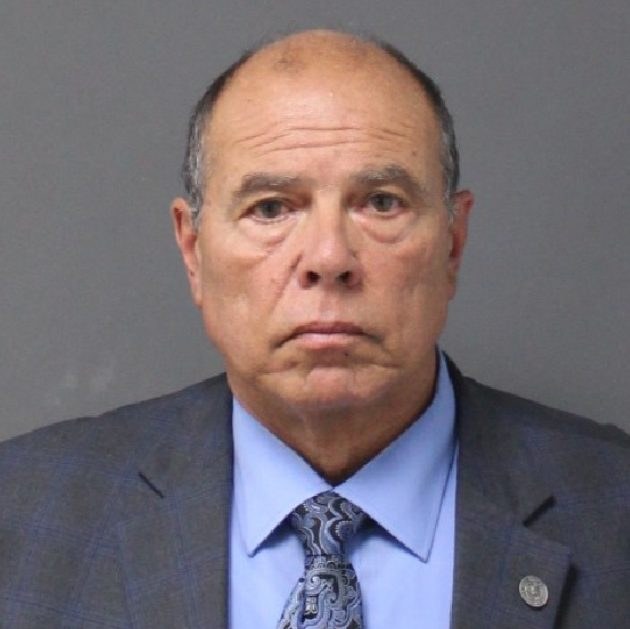
Michael Palmerie Jr. is a member of the Prospect, Connecticut Town Council and the co-owner of a local funeral home who turned himself in to Connecticut State Police on October 9, 2026, on a warrant charging him with second-degree stalking of his former business partner. According to the arrest warrant affidavit, state police documented more than 30 incidents between 2024 and August 2026 in which Palmerie allegedly surveilled the funeral home his ex-partner opened after the two men’s business relationship collapsed — driving through the parking lot, parking across the street, and following the man’s wife to church. Palmerie was released on a $25,000 bond and denies the conduct amounted to stalking. He is presumed innocent unless and until proven guilty.
Background Information
Palmerie’s dispute with his accuser goes back a decade. The two men were business partners at a Prospect funeral home until a falling-out in 2014; by 2016, the man said he had left the business, and he alleged that Palmerie threatened to “cut his throat” if he caused him any financial hardship, according to the warrant affidavit. Years later, the man opened his own funeral business in Prospect, and the harassment complaint he filed with state police in May 2026 alleged that the surveillance began in earnest from 2024 onward: Palmerie allegedly parked at his former partner’s business, drove slowly through the lot, or was seen parked at the post office next door. The victim is not named in the coverage; the Connecticut State Police posted the arrest announcement and warrant documents on its press page.
The Controversy or Incident That Led to Their Cancellation
Charged, not tried. Palmerie faces a criminal charge that has not been tested in court: he has been arrested and accused, not convicted, and he is presumed innocent unless and until proven guilty. The details below are allegations from the arrest warrant affidavit as reported by the Hartford Courant.
During the investigation, state police were provided more than 100 files of surveillance video, still photographs and screen shots, and said they identified more than 30 incidents involving stalking behavior — but that only eight of them fell within the statute of limitations, which is why the charge counts cover a bounded window of the alleged conduct. Among the alleged instances was an episode in which Palmerie followed his former partner’s wife’s vehicle to a local church and briefly blocked her in, the affidavit states. The complaint alleged harassment beginning in May 2026, and the Eastern District Major Crime Squad carried the investigation through Palmerie’s September interview to the October warrant.
When investigators met with Palmerie in September, state police said he did not deny that his vehicle appeared in the surveillance footage. “In all these pictures you’re showing me, I never got out of my car, never opened my window, never communicated with him at all,” Palmerie allegedly told police, according to the warrant affidavit. He disputed that his conduct was harassment, explaining some of his presence by traffic concerns and by a single visit to speak with a client who had gone to the wrong address.
Public Reaction and Consequences
Palmerie turned himself in to detectives on Friday, October 9, 2026, was processed on the second-degree stalking charge, and was released after posting a $25,000 bond, with an arraignment at Waterbury Superior Court scheduled for October 22. The Connecticut State Police publicized the arrest on its press page with the warrant documents attached — an official public record of a town councilman’s stalking charge. The case sits awkwardly for Prospect’s town government: one of its own council members charged with a stalking campaign conducted, in part, from the driver’s seat of a car idling outside another town businessman’s funeral home.
No statement from Prospect’s town government or from Palmerie’s attorney appears in the fetched coverage, and no council action against his seat was reported in the days after the arrest. The charge is a misdemeanor class in Connecticut, but the documentary record — a hundred surveillance files compiled by the alleged victim — gives the case an unusually heavy evidentiary footprint for a first appearance.
Current Status
Palmerie is charged with one count of second-degree stalking, free on a $25,000 bond, and scheduled to appear in Waterbury Superior Court on October 22, 2026. He has not entered a plea, and the alleged victim’s harassment complaint remains the foundation of the state’s case. The eight counts-of-conduct window within the statute of limitations frames what prosecutors must prove: that Palmerie knowingly engaged in a course of conduct intended to cause the man to fear for his safety. He is presumed innocent unless and until proven guilty.
Impact on Their Career/Life
For a small-town elected official whose family business depends on community trust, a stalking charge built on a hundred surveillance files is a career-defining event: Palmerie’s council seat, his role at the funeral home, and his standing in a town small enough that the victim’s business competes with his own are all entangled with the criminal case. The October 22 arraignment begins the court process, and the allegation’s centerpiece — years of alleged surveillance documented by the target himself — ensures the case will be tried as much in Prospect’s public opinion as in Waterbury’s courtroom. He is presumed innocent unless and until proven guilty.