Cindy Kinney
Introduction
Cindy Kinney is a Michigan school board trustee whose roughly 12-year tenure on the Wyandotte Public Schools Board of Education ended in resignation in February 2026, after a screenshot surfaced showing her replying “Dogs.” to a Facebook prompt that asked: “Dogs or Muslims you can only keep one.” The comment — which WDIV/ClickOnDetroit declined to republish in full due to its offensive nature — ignited a wave of public outrage in the community, and within days every one of Kinney’s six fellow board members had called for her to resign while the board passed a formal resolution condemning her post as “discriminatory and hurtful.” Kinney issued a written apology but did not attend the special board meeting convened over the post, citing a planned vacation, and her resignation was confirmed the following day by board member Nick Beaven-Parshal.
Background Information
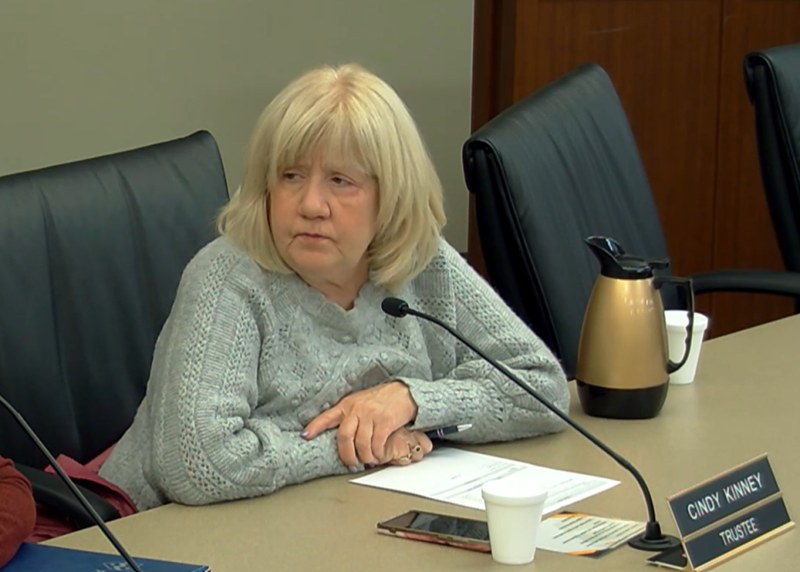
Kinney was first elected to the Wyandotte Public Schools Board of Education in 2014, and by the time of her departure Michigan Public described her as having spent 12 years on the board. The district serves Wyandotte, a Downriver city in Wayne County situated about 10 miles south of Detroit, where the December 2025 board meeting photo above shows her seated at the dais as a sitting trustee. Her long service made her an established figure in the district’s governance — which is precisely why the comment, when it surfaced, drew responses not only from residents but from every remaining member of the board she had served alongside.
The Controversy or Incident That Led to Their Cancellation
Allegations. The Facebook comment described in this section is documented: it circulated as a screenshot that Kinney effectively acknowledged by issuing a written apology for “my recent Facebook post.” Her resignation is likewise a documented, board-confirmed fact. No criminal charge or lawsuit was ever filed over the post, and nothing here has been adjudicated in court.
The controversy began when a screenshot surfaced showing Kinney responding to a Facebook prompt that asked: “Dogs or Muslims you can only keep one.” Kinney’s reply was a single word: “Dogs.” The post spread through the community and prompted widespread criticism from residents and local leaders; WDIV noted that it was not republishing the post itself “due to its offensive nature.” Because the exchange was preserved in a screenshot rather than secondhand recollection, and because Kinney’s own apology referred to her “recent Facebook post” and the “hurt and concern” it caused, the underlying fact of the comment was not in dispute by the time the board acted.
Public Reaction and Consequences
Public anger converged on a special board meeting held Tuesday, February 24, 2026, where community members gathered to voice their pain and demand accountability. One parent who took the podium told the board: “Coming from any individual, this sentiment would be disgusting. But from a school board member, this stance is all the more hurtful and disturbing.” Dawud Walid, executive director of the Michigan chapter of the Council on American-Islamic Relations (CAIR-Michigan), addressed the meeting with a message directed at the district’s students: “You are human beings with dignity, just like all other human beings that live on this earth and in the great state of Michigan. It is never acceptable for any of your elders to compare you to animals.” Walid also called for structural change inside the district: “There needs to be district-wide sensitivity training in relationship to Muslims and Islam. It should start at the board level … the superintendent going all the way down to staffers and teachers.”
The board’s response was swift and unanimous. At the Tuesday night meeting, all of Kinney’s fellow board members called for her to resign, according to meeting participants, and the six remaining members acted to distance the district from her post. In a formal resolution passed during the hearing, the board officially condemned the post as “discriminatory and hurtful,” clarifying that Kinney’s actions were “not in any way authorized or endorsed by the full school board, and does not reflect its views or perspective.” Kinney did not appear. In a written statement read at the hearing, she wrote: “I want to sincerely apologize for my recent Facebook post that has caused hurt and concern. I take responsibility for that impact. I want to be clear that I respect people of all faiths and backgrounds. It was never my intention to offend, marginalize, or diminish anyone in our community. I understand why many were upset, and I am truly sorry.” The board said Kinney skipped the meeting citing a planned vacation.
Current Status
Kinney is no longer on the board. Though she initially addressed the situation with the written apology, the pressure from the board and the public led to her formal resignation the day after the special meeting, and fellow board member Nick Beaven-Parshal confirmed the resignation on Wednesday, February 25, 2026. The school board said it will move to fill the vacant seat until the next scheduled school board election. No criminal complaint, lawsuit, or other legal proceeding arising from the post has been reported.
Impact on Their Career/Life
The post ended a 12-year run in Wyandotte’s public education governance overnight: a trustee first elected in 2014 was gone from the board within roughly a week of the screenshot surfacing, forced out not by an election but by the unanimous judgment of the colleagues who served beside her and a formal resolution condemning her comment as “discriminatory and hurtful.” Her brief written apology — taking responsibility for the “impact” while insisting she respects “people of all faiths” — stands as her only public accounting, and it did not stop the resignation her entire board demanded. The episode also left a mark on the district itself: CAIR-Michigan’s call for district-wide sensitivity training, from the board level down to staffers and teachers, framed the incident as a test of how the Wyandotte schools address anti-Muslim sentiment rather than the misconduct of a single member.