Raz Segal
Introduction
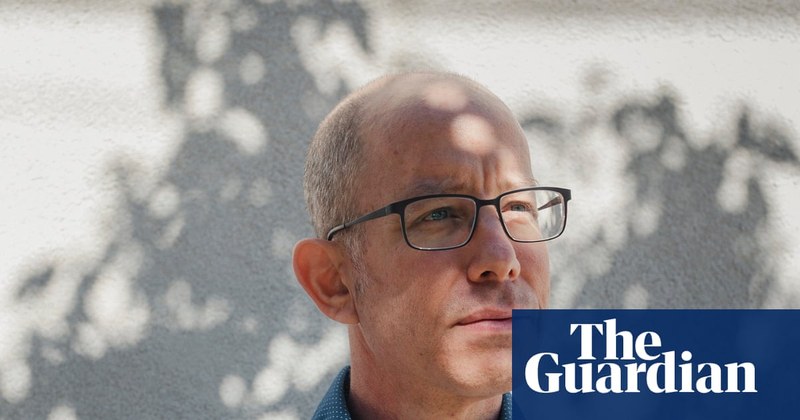
Raz Segal is an Israeli-American historian of the Holocaust and genocide, an associate professor at Stockton University in New Jersey. In June 2024, the University of Minnesota offered him the directorship of its Center for Holocaust and Genocide Studies on the near-unanimous recommendation of a search committee — then withdrew the offer five days later, citing “perspective” it had received from members of the community, after backlash to his October 2023 Jewish Currents op-ed calling Israel’s actions in Gaza “a textbook case of genocide”. More than two years later, the university paid him a $250,000 settlement whose terms stipulate it is not an admission of wrongdoing. Segal rejects his critics’ accusation that he justified Hamas crimes.
Background Information
Segal is Jewish, a dual United States-Israel citizen, and the grandchild of four Holocaust survivors, whose stories he grew up hearing. He holds a BA in economics from Bar-Ilan University, a master’s from Tel Aviv University, and a PhD from Clark University. He is the author of Days of Ruin: The Jews of Munkács During the Holocaust (2013) and Genocide in the Carpathians (2016), books on the Holocaust in Hungary and the wider Carpathian region — the subject of his Tel Aviv master’s thesis. At Stockton he is a tenured associate professor, an endowed professor in the study of modern genocide, and director of its Master of Arts program in Holocaust and Genocide Studies.
In spring 2024, University of Minnesota committees screening candidates for the center named Segal their clear favorite, citing his international connections and fundraising skills; one member called his vision “breathtaking”, and history department chair Sarah Chambers wrote of “almost unanimous (and enthusiastic) support” for him. The committee did question how he might engage people holding different views. The university offered him the position on June 5, 2024.
The Controversy or Incident That Led to Their Cancellation
Allegations. The claims described here — that Segal justified Hamas’s crimes — were accusations from political opponents, donors and pro-Israel activist groups; the Guardian reports the accusation is one Segal rejected and that his op-ed does not sustain. Nothing in this section was ever admitted by Segal, criminally charged, or adjudicated in court: the episode concerns his own protected speech and the university’s response to it.
The controversy traces to Segal’s Jewish Currents op-ed of October 13, 2023 — six days after Hamas’s attack on Israel, which killed more than 1,100 Israelis and captured some 240 hostages — arguing that Israel’s total blockade of Gaza and aerial bombardment, which had by then dropped 6,000 bombs, amounted to “a textbook case of genocide”. The same piece called Hamas’s attacks “mass murder” and “a war crime under international law”. Critics condemned it and accused him of justifying Hamas crimes — an assertion Segal rejected and the article does not sustain, according to the Guardian; “I would never justify Hamas,” he said.
Two days after the offer, professors Karen Painter and Bruno Chaouat resigned from the center’s advisory board in protest, accusing Segal in a letter of “justifying Hamas atrocities” and “blaming Israel” for October 7. The Jewish Community Relations Council (JCRC) of Minnesota and the Dakotas issued an action alert urging members to press the university to reverse the hire, calling his views “debunked extremist” positions. On June 10, 2024 — five days after the offer — interim president Jeff Ettinger withdrew it, writing that “additional members of the University community have come forward to express their interest in providing perspective on the hiring” and that, given the director’s community-facing role, “it is important that these voices are heard”. He offered no further explanation; the provost floated a tenured associate professorship in the history department, but no revised offer followed.
Public Reaction and Consequences
Allegations. The criticism of Segal’s views described below came from donors, legislators and activist groups, not from any investigative or legal process; his defenders, including scores of scholars, disputed it.
Records later obtained by Segal and the Center for Constitutional Rights showed the withdrawal followed a pressure campaign on university officials by donors, legislators and pro-Israel activists. One donor warned the hire would make center fundraising “grind to a halt”; another wrote to the board chair, “We cannot allow someone like Raz Segal a blatant anti Zionist to head the department of Holocaust studies [sic]”. Hundreds of near-identical emails carried the hashtag #Mothersagainstcollegeantisemitism, and on June 13, 2024, state representative Marion Rarick and 69 legislative colleagues wrote that they were “elated” the hiring had been paused. Ettinger thanked the fundraising warning as “Timely and helpful”. JCRC deputy executive director Ethan Roberts confirmed the group organized opposition while maintaining that it does not weigh in on faculty decisions.
Opposition to the withdrawal was immediate: hundreds of professors signed letters condemning the decision, and forty leading Holocaust and genocide scholars warned it set a “dangerous precedent”. UMN’s faculty senate passed a vote of no confidence in Ettinger and provost Rachel Croson, and the American Association of University Professors called for reinstating the offer.
Current Status
In late July 2026, Segal reached a $250,000 settlement with the University of Minnesota. The agreement contains no admission of liability or wrongdoing by either party; UMN spokesperson Briana Reenshuler said the university “remains focused on advancing our core educational mission”; it did not respond to the Guardian’s request for comment. He had asked the university to restore the original offer and was told that was “off the table”; the directorship remains unfilled. He said the payout should encourage the dozens of scholars punished for criticizing Israel to “fight back”. Through the Center for Constitutional Rights, which argued UMN had unconstitutionally retaliated against his protected speech, he called the settlement “a successful refusal to accept the world of lies that blur an ongoing genocide”.
Impact on Their Career/Life
Segal remains a tenured professor at Stockton, where the fallout has followed him: in 2026 the university removed language calling the war in Gaza a genocide from the webpage of the program he directs, after a complaint from its largest donor, John F. Scarpa. He said the withdrawn offer left a “stigma” he feared damaged his chances at similar academic roles, and called the episode a “crushing realization” that universities he had trusted were “intellectually and morally absolutely bankrupt”. Of the still-vacant Minnesota post, he asked: “Which serious scholar would take this position?” AAUP leader William Jones said he was glad Segal was “compensated for his mistreatment”, while pressing the university for a public acknowledgment that it was wrong.