Artyom Kirpichenok
Introduction
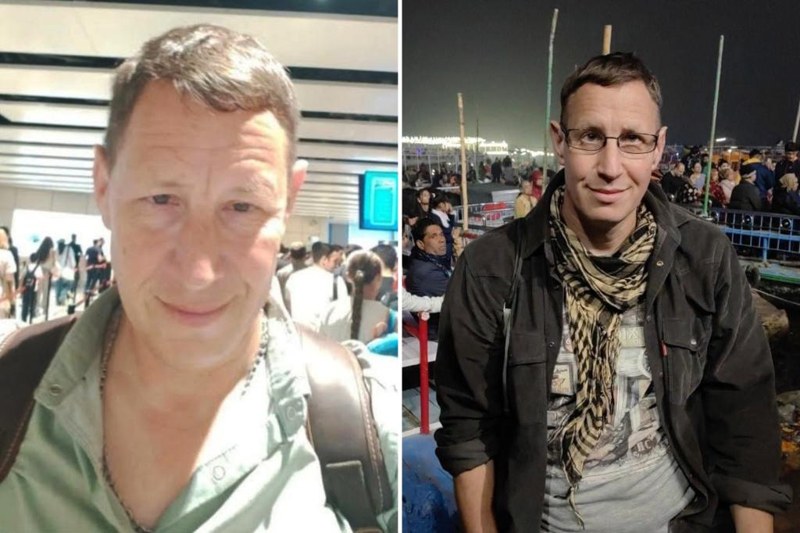
Artyom Kirpichenok is a Russian-Israeli historian and journalist specializing in Zionism, Israel, and Middle Eastern history who became a vocal critic of the Jewish state — and who now sits in an Israeli prison accused of its most serious security offenses. According to reports in Israeli and Russian media, Kirpichenok, 51, was taken into custody by the Israel Security Agency (Shin Bet) on August 2, 2026, after arriving at Ben Gurion International Airport from Russia, and was indicted on September 4 on several counts of espionage, including contact with foreign intelligence operatives. His family and supporters insist he is innocent, his lawyer says he falsely incriminated himself under pressure, and the case remains shrouded by a strict Israeli gag order.
Background Information
Kirpichenok was born in 1975 in Leningrad — today’s St. Petersburg — and immigrated to Israel in the 1990s, where he lived for about fifteen years, served in the Israeli army, and earned degrees at the Hebrew University of Jerusalem, including a doctorate in Slavic studies. He returned to Russia in the mid-2000s and built a career as a historian and columnist, publishing books sharply critical of Israel and Zionism, including “A People’s History of Israel” (2019) and “Israel: The Road to Catastrophe” (2024), while heading the Slavic studies department at the Center for Arab-Eurasian Studies and writing for the Turkish broadcaster TRT. According to Ynet, he visited Iran — which Israel considers an enemy state — several times, including a roughly two-week trip in 2018 that he documented on social media, and after the October 7 massacre he publicly justified Hamas’s actions. Israeli law criminalizes travel to Iran without special permission from the Interior Ministry, an offense carrying a prison sentence of up to four years.
The Controversy or Incident That Led to Their Cancellation
On August 2, 2026, Kirpichenok landed at Ben Gurion Airport for what his support group says was an academic conference, and officers from the Shin Bet detained him — after which he effectively vanished from public view for more than a month. Family representatives told Meduza that, based on unofficial information, investigators suspect him of espionage and of contacting an agent of a foreign intelligence service, while noting that even his lawyer did not initially know the exact accusations because of the gag order. On September 4, he was formally indicted on several counts of espionage; his lawyer, Inna Lebedinskaya-Katz, told the Russian newspaper Izvestia: “Artem is charged with espionage under several articles that cannot be disclosed yet. These are the most serious crimes against state security.” Prosecutors allege that foreign intelligence agencies instructed the defendant to conduct clandestine missions and influence operations on their behalf against the State of Israel, according to Ynet. The charges are allegations, not convictions, and the case is being litigated under a publication ban that has kept most details from the public record.
Public Reaction and Consequences
The detention drew swift condemnation from Kirpichenok’s family and friends, who launched a support campaign and a petition demanding his release in mid-August, describing the case as political persecution of a writer whose only “crime” was his published criticism of Israel. His support group claims the conference invitation that brought him to Israel may have been a trap set by security services; family members said municipal officials in the city where the conference was supposedly scheduled told them no such event had ever been registered. The Russian Embassy in Israel said it learned of the detention only “after the fact from the media” and submitted an inquiry to Israeli authorities. Kirpichenok is being held in a Shin Bet pretrial detention facility — reports describe a cell where the lights stay on around the clock — and a request to move him to house arrest at his apartment in Ashkelon was denied, with the judge citing the severity of the charges.
Current Status
Kirpichenok is imprisoned in the maximum security wing of Ayalon Prison, according to Izvestia, and prosecutors have filed a request that he be detained until the end of proceedings. His lawyer has asked the court to exclude what she described as a confession obtained under pressure — Kirpichenok told his attorney during their August 23 meeting that he had “falsely incriminated himself under pressure from investigators,” according to family accounts relayed by Meduza, which also noted there is no independent confirmation that investigators pressured him — and has requested psychiatric evaluation for her client, citing a depressed state. Court proceedings in the case are closed to the public, and the gag order remains in force. As of the September 7 coverage, the espionage allegations remained unproven allegations, and Kirpichenok is presumed innocent unless and until an Israeli court rules otherwise.
Impact on Their Career/Life
A historian whose work leaned on open sources — “He doesn’t have any [classified] information. How would he have access to any?” a friend told Meduza — now faces potential life imprisonment under Israel’s espionage statutes, a fall that has stunned the colleagues who knew him as an “armchair scholar” of Balkans and Middle East history. His position heading Slavic studies at the Center for Arab-Eurasian Studies and his regular column work are, in practice, frozen for as long as the detention lasts, and his published books are now cited worldwide mainly as evidence in a security case rather than as scholarship. The family describes the human toll in stark terms: months in solitary conditions, a confession he says was coerced, and hearings conducted through soundproof glass. Whatever the court ultimately decides, the historian who wrote “Israel: The Road to Catastrophe” has become the subject of a case that both his supporters and Israeli prosecutors present as a defining test — of free criticism versus state security, and of what happens to a critic who boards a flight to a country he no longer calls home.