Michael Kotlikoff
Introduction
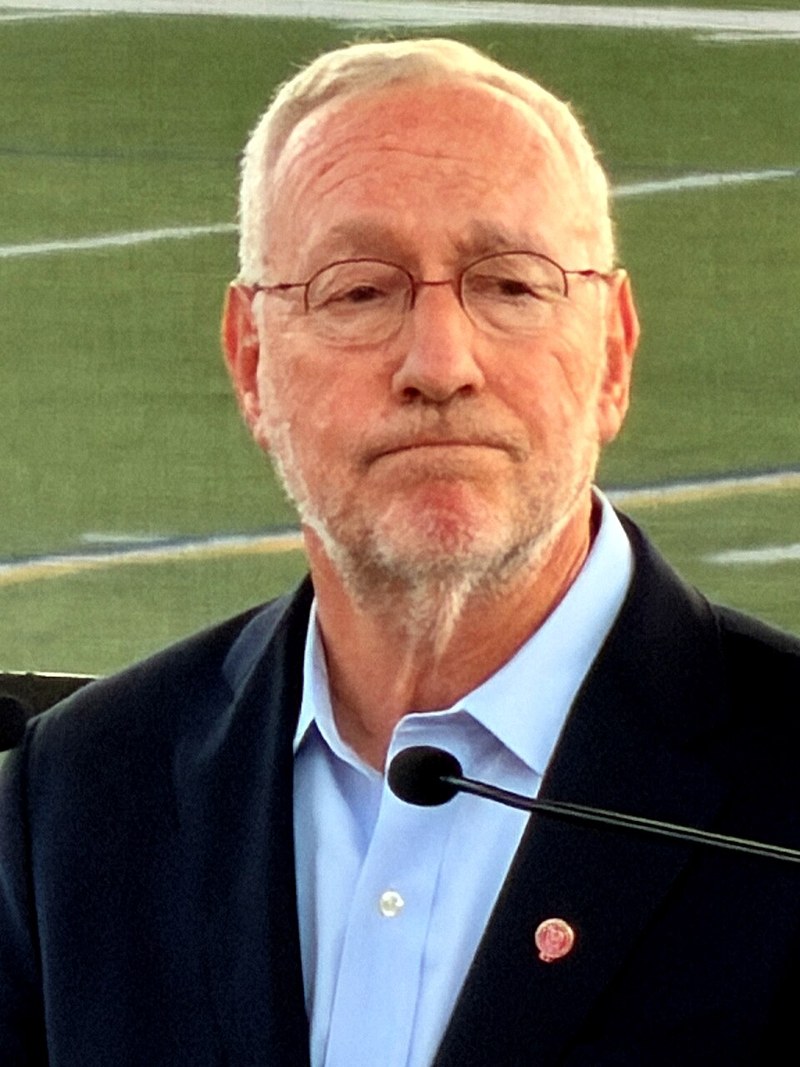
Michael Kotlikoff is the president of Cornell University — interim president since July 2024 and permanent president since 2025 — and on Wednesday, Oct. 14, 2026, he sat before the university’s Faculty Senate absorbing open anger over his administration’s handling of a former student’s report that she was gang raped at a fraternity house in 2024 . The closed-door meeting preceded debate on a no-confidence resolution against his administration — a largely symbolic vote, but one that sends a message to the trustees who alone can remove him . Kotlikoff acknowledged missteps and asked for more time; after he left the room, speaker after speaker said they had lost confidence in his administration’s ability to combat sexual assault on campus .
Background Information
Kotlikoff’s tenure has already included a dining and custodial workers strike, a $60 million settlement with the Trump administration over civil-rights investigations, and activist accusations that his administration stifled campus protests . The case now consuming his presidency began in October 2024, when a Cornell student was allegedly sexually assaulted at the Chi Phi fraternity house in Ithaca; she is identified in court documents by the pseudonym Jane Doe, and her lawsuit, filed in September 2026, accuses the university of mishandling her complaints alongside seven named Chi Phi members — Matthew Ingalls, Winston Lee, Gillio Lopes, Diego Sarabia, Scott Norris, Scott Kretzschmar and Johnathan Newell — all of whom deny her allegations, and none of whom has been criminally charged .
The Controversy or Incident That Led to Their Cancellation
Allegations. The claims in this section come from a civil lawsuit filed in September 2026 by a former Cornell student identified as Jane Doe, from faculty critics of the administration, and from admissions Kotlikoff himself made in a New York Times interview. Nothing involving Kotlikoff personally has been criminally charged or adjudicated in court. The assault allegations are directed at the seven former fraternity members, all of whom deny them. Kotlikoff acknowledges “missteps” in the university’s response but rejects any suggestion he was indifferent — “I really reject the idea that I had no interest in it or was not concerned about it” — and has said he is “personally sorry” for what Jane Doe experienced.
At the time of the 2024 report, Kotlikoff publicly called the allegations “deeply disturbing,” suspended the fraternity, said criminal and university investigations were underway, and convened a presidential task force on how Cornell handles sexual assault . But in an interview with The New York Times published the Tuesday before the Senate meeting, he acknowledged he never followed up to learn what had happened to the woman or to the criminal investigation; that he never read the Cornell Police Department’s report on the rape allegations, citing confidentiality and a university policy that top administrators stay out of criminal investigations; and that until recently he did not know she had dropped out of Cornell — or that students had been expelled or suspended over the incident at all . He learned she had left the university only when she filed her lawsuit . According to records obtained by the Times, the university’s internal investigation ended with two of the men expelled, two suspended and one already-graduated man barred from campus, while the rest received lighter punishments, including no-contact orders and “reflection papers” .
The criminal side stalled early: Tompkins County District Attorney Matthew Van Houten declined to pursue charges after reviewing a police summary — the district attorney “quickly decided that no crime had occurred,” in the New York Post’s account — but later said the summary omitted key details and reopened the investigation after the lawsuit. Gov. Kathy Hochul then removed him from the case, appointed Attorney General Letitia James as special prosecutor and ordered an independent review of Cornell’s handling of the allegations .
At Wednesday’s Faculty Senate meeting, closed to the media but recorded in audio obtained by the Associated Press, Kotlikoff asked for more time to implement reforms and said the problems “are not simplistic, they’re not easy, they can’t be brushed aside with a wave of a hand.” He argued that replacing a president is not the right way to address the situation and would harm Cornell’s reputation, and left open the possibility of sweeping restrictions on Greek life if fraternities cannot operate safely — the day after announcing a ban on fraternity parties through the end of the academic year .
Public Reaction and Consequences
After Kotlikoff departed, a string of faculty speakers said they had lost confidence in the administration’s ability to combat sexual assault on campus. “The faculty were extremely angry. They gave him a hard time, I think appropriately so,” said Richard Bensel, a professor of government; research and policy expert Iris Packman said Kotlikoff got “defensive”; and labor history professor Paul Ortiz, the resolution’s lead sponsor, said the debate was animated by the perception that the administration wasn’t doing enough about “a perpetual ongoing crisis” . Co-sponsor Ariana Kim called his admission that he never followed up “appalling in and of itself… That you don’t know about a student who faced an alleged horrific crime, that you don’t think to check in” . Co-sponsor Anne Marie Brady said “there doesn’t seem to be independence between the administration and the Cornell Police Department,” and while she welcomed his shift of assault investigations to the state police, she called its timing, one day before the debate, “a bit disingenuous” . Over the preceding weekend, more than 200 faculty and staff signed a letter to students declaring “this administration does not speak for us,” and protesters chanted “Kotlikoff has got to go” .
Current Status
The resolution before the roughly 130-member Faculty Senate declares no confidence in the administration’s ability to handle reports of sexual assault on campus; debate resumes Oct. 28, 2026, followed by electronic voting in which a simple majority is required — a vote that would be largely symbolic, but would send a message to the trustees who ultimately decide who leads Cornell . The Board of Trustees’ newly formed special committee has retained former acting US Attorney General Sally Yates to lead a comprehensive independent review of how the university prevents and responds to sexual misconduct . Attorney General Letitia James’s special-prosecutor investigation remains pending and no one has been criminally charged; Gov. Hochul has stopped short of calling for Kotlikoff’s resignation . The fraternity-party ban runs through the end of the academic year, and state police are temporarily handling campus sexual-assault investigations .
Impact on Their Career/Life
Kotlikoff’s presidency now hangs on the trustees: a no-confidence passage would not remove him, but it would formally put the faculty on record against him, and he himself has argued that ousting a president would only harm Cornell’s reputation . The New York Times admissions — that he never followed up, never read the police report and did not know the woman had left — have become the defining public account of his stewardship, published days before the vote . Even some students pressing for institutional change say they do not want him removed merely to be replaced: “We don’t want Kotlikoff to go down for the mishandling of Jane Doe’s case and then someone to come in and mishandle another case the exact same way,” said sophomore John Hartnett .
Sources
- *New York Post, “Cornell president pressed by angry faculty members frustrated by his handling of gang rape case,” Oct. 15, 2026 — source
- *PBS NewsHour (Associated Press wire), “Cornell president admits he never followed up on gang rape allegation ahead of no-confidence debate,” Oct. 14, 2026 — source
- *The Guardian, “Cornell president acknowledges he knew about fraternity sexual assault but didn’t follow up,” Oct. 14, 2026 — source
- *NPR, “Cornell’s Faculty Senate considers no-confidence vote for school’s president,” Oct. 14, 2026 — source
- *The Hill, “Cornell faculty prepares no-confidence vote over sexual assault handling,” Oct. 14, 2026 — source
- *X (@nypost), “Cornell president pressed by angry faculty members frustrated by his handling of gang rape case,” Oct. 15, 2026 — source