Aria Fani
Introduction
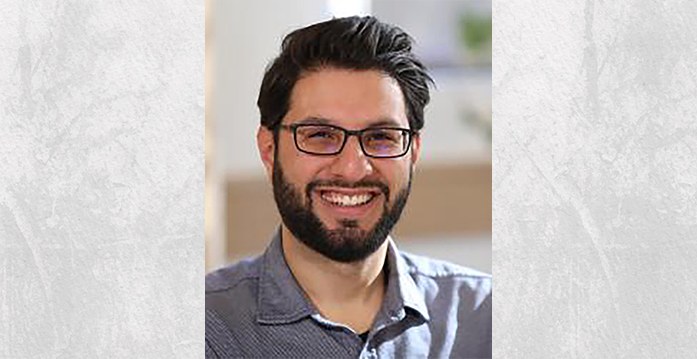
Aria Fani is an Iranian-American associate professor of Persian and Iranian studies at the University of Washington’s Jackson School of International Studies. He served as director of the university’s Middle East Center until Friday, March 27, 2026, when the university removed him from that role after he sent emails criticizing the US and Israel’s war on Iran. Fani remains an associate professor — he lost the directorship, not his faculty position — but the Guardian framed his case as that of the latest critic of Israel to lose a position at a US university, one of at least three incidents it counted in a single month in which faculty members faced suspension or dismissal after opposing US-Israeli actions in the Middle East. Fani has said the messages represented his personal views on the conflict, and he views his removal as part of a broader national trend around free speech in academia.
Background Information
Fani was an associate professor in the University of Washington’s Jackson School of International Studies, where his work centers on Persian and Iranian studies. In 2025, he signed a three-year agreement to serve as director of the university’s Middle East Center, a role whose duties included overseeing programming, engaging with the community, and fundraising, according to the Seattle Times. At the time the removal was reported, he was on medical leave for the quarter, according to the same reports. He had spoken publicly about the war’s human cost before: the Guardian quotes him telling the university’s student newspaper the previous July that “if you tell the dozens of children that were killed in Israeli bombardment, that were killed in Iran, or the families of the nuclear scientists who were just wiped out – I hardly imagine they would say that the world is a more peaceful place.”
The Controversy or Incident That Led to Their Cancellation
On 18 March 2026, Fani reportedly wrote in a newsletter sent via the Middle East Center’s listserv that “Israeli actions tell us that they seek the destruction of the state, not just its ruling class.” According to the Guardian, the email reportedly added that it “was always BS” that the Islamic Republic was pursuing nuclear weapons, and the newspaper reported that he had used the center’s newsletters to describe Zionism as “cancerous.” Fani told The Daily, the university’s student newspaper, that the messages included his personal views on the ongoing conflict in Iran. The university itself never publicly described the content of the emails; in a statement, it said, “Out of respect for employee privacy and confidentiality, the university chooses not to discuss the circumstances surrounding individual employment outcomes. Employment decisions are based on the requirements of the position and university expectations.” Because the university declined to detail its reasoning, the published characterizations of his email rest on press reporting rather than any official account.
Public Reaction and Consequences
According to The Daily, Fani received a phone call the morning of March 27, 2026, from Jackson School of International Studies director Daniel Hoffman informing him of the decision, and he later had several follow-up conversations with Hoffman about both his removal and his use of the center’s listserv. UW associate director of strategic communications David Rey confirmed the move in an email: “I can confirm that Aria Fani is no longer the director of the University’s Middle East Center,” adding that Hoffman “will cover the administrative responsibilities of the Middle East Center for this spring and summer.” The Guardian placed the case in a wider pattern, reporting it alongside the lawsuit of Idris Robinson, a philosophy professor whose contract was terminated by Texas State University after an off-campus talk on the Israeli-Palestinian conflict, and the dismissal of Shirin Saeidi, former head of the University of Arkansas’s Center for Middle East Studies. The newspaper also cited Palestine Legal attorney Chloe Truong-Jones, who said her organization’s requests for help from faculty disciplined over speech on Palestine rose from 37 in 2022 to 150 the following year, a 305% increase. Fani, for his part, told The Daily he saw his removal as part of a broader national trend around free speech in academia.
Current Status
Fani is no longer director of the Middle East Center, but he remains an associate professor at the University of Washington, a distinction both the university’s statement and The Daily’s report make explicit. Hoffman is covering the center’s administrative responsibilities for the spring and summer. The Guardian’s headline described Fani as “fired from [his] director job,” but the reporting itself confirms the removal applied to the directorship only; he is still employed as a professor, though he was on medical leave for the quarter when the story was reported. No legal action connected to the removal has been reported, and the university has not said whether the decision is subject to review. The circumstances behind the university’s decision remain officially undisclosed.
Impact on Their Career/Life
The removal cost Fani a leadership post he had agreed to hold for three years and had occupied for roughly a year — along with the duties that came with it, including overseeing the center’s programming, community engagement, and fundraising, and access to its listserv as a channel for university-affiliated communication. He retains his faculty position and his academic career at Washington, but the case drew national attention and tied his name to a spreading dispute over speech restrictions at US universities, which the Guardian characterized as accelerating since Donald Trump returned to power. Fani’s own account — that he was expressing personal views on the conflict and that his removal reflects a national free-speech trend — now stands alongside the university’s undisclosed reasoning as the two competing explanations of what happened to him.