Janique Sanders
Introduction
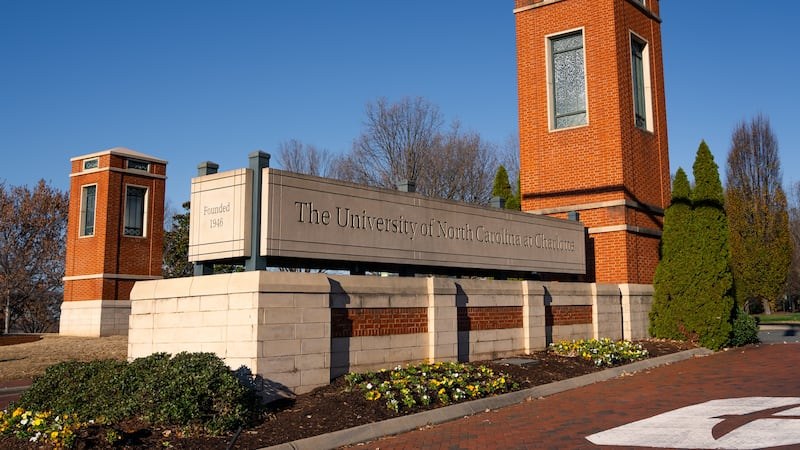
Janique Sanders was an assistant director of Leadership and Community Engagement at the University of North Carolina at Charlotte who lost her job in May 2025, the day after a secretly recorded video of her discussing diversity, equity and inclusion work went viral. The footage was captured by Accuracy in Media, a conservative advocacy group that conducts hidden-camera stings, and published online under the title “CAUGHT ON TAPE: UNC Administrator Admits They Ignore DEI Ban.” In the video, Sanders said outward DEI positions no longer existed at the university but indicated there were ways to do work that is “covert.” UNC Charlotte responded publicly within a day, saying the individual featured in the video had no policymaking authority and announcing that she was no longer employed. In December 2025, Sanders filed a federal lawsuit accusing the university of violating her First Amendment right to free speech and discriminating against her because she is African-American.
Background Information
Sanders served as assistant director of the Office of Leadership and Community Engagement at UNC Charlotte. According to her lawsuit, the role had been renamed from a previous position in the university’s Office of Identity, Equity and Engagement, a change that followed the UNC Board of Governors’ 2024 repeal of DEI policy language. North Carolina’s legislature had not broadly banned DEI positions or programs, but the UNC System Board of Governors had been pushing its institutions to eliminate DEI, including related positions. Sanders’s case was one piece of a broader campaign: beginning April 14, 2025, Accuracy in Media — a nonprofit whose donors are mostly private — released a series of undercover videos that it said captured employees at six public universities in North Carolina and Florida describing how their institutions were circumventing DEI restrictions.
The Controversy or Incident That Led to Their Cancellation
According to the lawsuit, Sanders was approached in her office in the fall of 2024 by two people who asked about job opportunities working specifically in DEI. She told them that was “no longer a recognized programmatic space” and tried to steer them toward community outreach initiatives, not knowing the conversation was being recorded. Accuracy in Media released the footage in late May 2025 as a video with heart-pumping music and a hidden camera. In it, Sanders says, “I’m just going to give you the real spiel,” and “We’ve renamed, we’ve reorganized, we’ve recalibrated, so to speak,” adding that “if you’re looking for, like, an outward DEI position—not gonna happen. But if you are interested in doing work that is covert, there are opportunities.” The clips spread rapidly across social media, amplified by Corey DeAngelis, a conservative education activist and senior adviser to AIM who has more than 200,000 followers on X. The lawsuit later argued that the videos that went viral were short excerpts from the full exchange, represented her personal opinions, and lacked context.
Public Reaction and Consequences
The university moved within a day. A university official texted Sanders the evening the video was posted, and she confirmed it was not AI-generated or otherwise fabricated; later that evening she received a call saying the university would be conducting an investigation, but the next day she was informed she would be terminated, according to the lawsuit. On May 29, 2025, UNC Charlotte said publicly: “The individual featured in the video had no policymaking authority, no role in compliance matters and was not authorized to speak on these issues… Following an internal review, the individual is no longer employed by UNC Charlotte.” In a statement to Inside Higher Ed, the university described the recorded employee as a “junior employee,” said her comments suggesting the university was not acting in good faith were “entirely inaccurate,” and explained that her employment was discontinued following an investigation into whether she attempted to represent the university without the authority to do so.
The firing also drew criticism of the university itself. The UNC Charlotte chapter of the American Association of University Professors criticized the university’s response and described the video and subsequent firing as the result of outside pressure. Sanders’s attorneys said in a press release: “The ugly reality is that Ms. Sanders was targeted because she provided a black female image for an agenda that questions black and female talent. Instead of defending one of its own stars, UNCC bowed to bigotry and the threat of political backlash.” Accuracy in Media defended its methods, with president Adam Guillette telling Inside Higher Ed that “the work that we do—hidden camera investigative journalism—is the most accurate and honest form of journalism possible.” By that point, three employees whom AIM had recorded — at Charlotte, Asheville and Western Carolina — were no longer employed.
Current Status
Sanders’s case is pending in federal district court. On December 23, 2025, she filed a lawsuit against UNC Charlotte alleging that her termination violated her First Amendment right to freedom of speech and amounted to discrimination based on her race. The Equal Employment Opportunity Commission had issued her a right-to-sue letter, a critical step that allowed the discrimination claims to proceed in federal court. Her complaint seeks compensation for lost wages and emotional distress, and contends that the university never interviewed her about the short clips, never sought the complete footage, and failed to follow its own disciplinary procedures for a first offense. When reached for comment, a university spokesperson said the school does not comment on pending litigation.
Impact on Their Career/Life
The undercover video and firing ended Sanders’s UNC Charlotte career about a day after the footage’s release and made her one of three university employees who were no longer employed following Accuracy in Media’s 2025 sting campaign — a pattern that showed how quickly hidden-camera videos can produce terminal consequences before a full review is completed. Her lawsuit frames the episode as a case study in that speed: the complaint emphasizes that she was expressing personal viewpoints rather than official university policy, that race was a motivating factor in her dismissal, and that she was fired without a full investigation, interviews, or consideration of the full context of her remarks. Whatever the litigation’s outcome, the video remains online and attached to her name, and her case has become part of the record of how the fight over DEI played out on individual careers in 2025 — captured on hidden cameras, adjudicated on social media, and contested in federal court.