Ronald dela Rosa
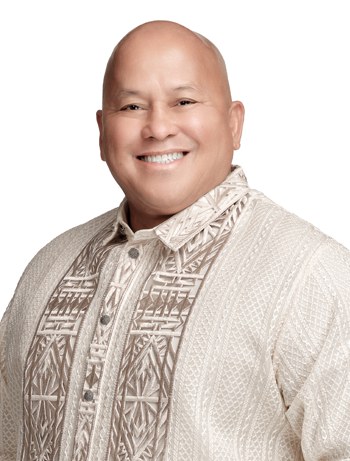
Introduction
Ronald “Bato” dela Rosa is a sitting Philippine senator and former chief of the Philippine National Police who has been a fugitive since May 2026, when the International Criminal Court unsealed a warrant charging him — as an alleged “indirect co-conspirator” of former president Rodrigo Duterte — with crimes against humanity in the deadly “war on drugs.” On October 23, 2026, the government put a 50-million-peso (about $787,000) bounty on his capture, declared him “armed and dangerous,” and gave him one week to surrender .
Background Information
Dela Rosa was Duterte’s first national police chief, designated to enforce the anti-drug crackdowns Duterte launched upon becoming president in 2016, and served as PNP chief from 2016 to 2018 — reporting that calls him the drug war’s “main architect” across Duterte’s presidency and his earlier term as Davao City mayor. After retiring from the police force he was appointed to a top prisons post, then won a Senate seat in 2019. Death-toll estimates for the crackdown range from more than 6,000, per the national police, to as many as 30,000 claimed by human-rights groups; the ICC’s investigations span 2011, when Duterte was still Davao mayor, to 2019 .
The Controversy or Incident That Led to Their Cancellation
Charged, not convicted — and a fugitive. The ICC warrant charges dela Rosa with murder as a crime against humanity; he has not been tried, has denied authorizing extrajudicial killings, and is presumed innocent. His lawyer argues no Philippine warrant exists. This page tracks the charges, the manhunt and the bounty — not a conviction.
The ICC warrant was issued confidentially in November 2025 and charged dela Rosa with the murder of “no less than 32 persons” allegedly committed between July 2016 and April 2018, casting him as an “indirect co-conspirator” of Duterte, who was arrested in March 2025 and now awaits trial in The Hague. The tribunal unsealed the warrant in May 2026, and dela Rosa — mostly in hiding for months — emerged on May 11 to take refuge inside the Senate building, where he cast a vote for Senate President, then slipped out days later after a stand-off between security guards and investigators attempting to arrest him, in which shots were fired. Interior Secretary Jonvic Remulla later said the government lost that arrest chance because it was forced to honor a “gentleman’s agreement” with Senate President Alan Peter Cayetano .
On October 23, 2026, Remulla announced the 50-million-peso bounty at a televised Camp Crame news conference with top police officials, funded from the intelligence funds of the Interior Department and the PNP, declaring: “As of today, Senator Bato will be considered armed and dangerous.” He said dela Rosa was being monitored in the country’s south — protected, officials said, by a well-financed armed group in Mindanao with whom authorities were negotiating his peaceful surrender to prevent a potentially deadly clash — and that “he has shown nothing but cowardice by going into and remaining in hiding… It’s time for the gloves to come off. It’s time to render justice to his victims.” A police task force led by a general was formed for the manhunt, and officials said dela Rosa would be handed to the ICC if captured .
Public Reaction and Consequences
PNP chief Gen. Jose Melencio Nartatez said dela Rosa had one week to surrender while operations continued, that searches across Mindanao, Luzon and Metro Manila had all turned up negative with no pattern to his movements, and that the senator was possibly protected “by an armed group or group of supporters” whose members would “face the consequences” — with coddlers warned they face criminal cases. The bounty made dela Rosa the country’s No. 1 most-wanted fugitive, ahead of gambling tycoon Charlie “Atong” Ang. His counsel, Israelito Torreon, rejected the bounty outright, saying a local warrant must first exist: his law firm posted that “the only document the government has is a warrant from the International Criminal Court,” a foreign tribunal operating under a treaty the Philippines withdrew from effective March 17, 2019, and that “no Philippine judge has examined that warrant, adopted it or issued one of his own” .
Current Status
As of October 23, 2026, dela Rosa remained at large with a P50-million bounty on his head, a one-week surrender deadline running, and a task force headed by Maj. Gen. Wilson Joseph Lopez of the PNP’s intelligence directorate hunting him. The government reiterated it would surrender him to the ICC upon capture. His ICC warrant turns a year old in November, and Duterte’s trial in The Hague is set to begin on November 30 — proceedings dela Rosa could yet join if caught, charged over the same drug war he ran .
Impact on Their Career/Life
A career that ran from running the country’s most consequential and deadliest police campaign, to a Senate seat won in 2019, has ended — for now — as the government’s No. 1 fugitive, hunted by the very police force he once commanded. The ICC charges make him the most senior Philippine official after Duterte to face the drug-war reckoning, and the government’s bounty marks a reversal from the months when a Senate “gentleman’s agreement” let him come and go. With Duterte on trial in The Hague from November 30, the drug war’s onetime enforcer now faces the prospect of standing before the same court, the subject of the international arrest order he has spent the past year evading .
Sources
- NY Post, “Philippines announces $800K bounty for senator wanted by ICC for crimes against humanity,” October 23, 2026 — source
- Philstar, “P50 million bounty up for Bato’s capture,” October 24, 2026 — source
- Manila Times, “P50M bounty up for capture of ‘armed and dangerous’ Dela Rosa,” October 24, 2026 — source
- The Straits Times, “Philippines offers bounty for Duterte enforcer Bato Dela Rosa,” October 23, 2026 — source