Jancys Santiago
Introduction
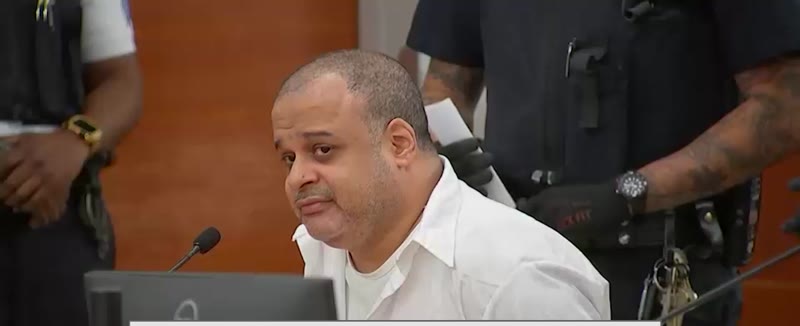
Jancys Santiago is a 50-year-old man sentenced on September 18, 2026, to 25 years in prison for the December 2001 rape of a 21-year-old college student inside her Bronx apartment — a stranger attack that went unsolved for more than two decades until New York investigators cracked it with investigative genetic genealogy, a DNA technique that maps family trees from opt-in ancestry databases. A Bronx jury found Santiago guilty of first-degree rape in June 2026, and the Bronx District Attorney’s office says he is the first person convicted by a New York jury in a sexual assault cold case using the method. Justice Laurence Busching ordered the 25 years to run consecutively to a 20-year sentence Santiago is already serving for a strikingly similar 2000 Manhattan rape.
Background Information
Little public biographical detail exists about Santiago beyond the court record. According to the New York Post, he bound and sexually assaulted Katy Vicchitto — then a 21-year-old college senior — inside her Bronx apartment in December 2001, where he had been living upstairs in her building, before fleeing to Florida, where he started a family. He was found living in Florida and arrested in November 2023.
The break in both cases came after the Bronx District Attorney’s office received a $500,000 grant from the U.S. Department of Justice to solve cold cases with investigative genetic genealogy. Forensic experts uploaded crime-scene DNA to an opt-in ancestry website — the kind people use to map family histories — and found users who appeared to be distant relatives of the attacker; by mapping those relatives’ family trees, investigators narrowed the search to Santiago’s family line, and DNA gathered from a water bottle he discarded matched evidence from both rapes. The NYPD’s forensic lab built out the family tree that cracked the long-unsolved crime.
The Controversy or Incident That Led to Their Cancellation
Adjudicated vs. alleged. Santiago’s conviction on first-degree rape by a Bronx jury in June 2026, and his earlier court conviction on first-degree rape and first-degree burglary in the 2000 Manhattan case, are matters of court record; the conduct described below is what prosecutors proved at trial. Santiago was not convicted of any other conduct. He maintains his innocence, questioned the reliability of the DNA science at sentencing, and plans to appeal.
On December 13, 2001, according to details presented at trial, a man broke into Vicchitto’s Bronx apartment while she was asleep, threatened her, covered her face, bound her wrists and ankles with wire hangers, and raped her. In court, Vicchitto said she felt “completely trapped” as both her home and her body were violently invaded.
Nineteen months earlier, prosecutors said, Santiago had ambushed a 27-year-old woman, Sarah Canavan Clark, inside her Midtown apartment after hiding in her closet wearing a mask, threatening to kill her, tying her limbs with wire coat hangers and raping her. In the Manhattan case, Santiago waived his right to a jury, and a judge found him guilty of first-degree rape and first-degree burglary in late 2025; the Manhattan judge sentenced him to 20 years in prison.
At the sentencing hearing, Vicchitto — now a married third-grade teacher and mother of three — described the lifelong toll of the attack: “I can’t think of a day when what happened to me hasn’t crossed my mind at least once,” and “My experience as a survivor of sexual assault affects every aspect of my life.”
Public Reaction and Consequences
Vicchitto begged the judge for the maximum sentence, telling the court, “I ask the court to consider the impact of 25 years of living with the effects of this trauma,” “knowing that the perpetrator was living for 25 years free and without consequences for brutally invading our lives.” Speaking at a press conference after the sentencing, she said the trauma “changed nearly everything for me,” causing panic attacks, hypersensitivity and a fear of being alone. Assistant District Attorney Gabrielle Martin-Klein blasted Santiago for “escaping justice” in Florida, telling the court, “He gave her a life sentence of fear.”
Busching sentenced Santiago to 25 years, to run consecutively with the Manhattan term, citing the “diligent and professional jury” that found him guilty, and also imposed five years of post-release supervision, a permanent order of protection and a sex offender registration order; the judge praised Vicchitto for enduring the pain of having hairs pulled from her body after the attack to preserve DNA evidence for a rape kit. The case also drew reaction over the method itself: supporters call investigative genetic genealogy a powerful tool for cold cases, while privacy and civil-liberties advocates — including NYU’s Policing Project, which issued a June 2026 report on the risks — have called for regulation; only Maryland and Utah have comprehensive laws governing its use.
Current Status
Santiago is serving a 25-year prison sentence that runs consecutively to the 20-year term he is already serving for the 2000 Manhattan rape, and must register as a sex offender. His defense attorney, Michael Croce, said at the hearing that his client maintains his innocence and plans to appeal, arguing the prosecution relied entirely on science without eyewitness testimony. “It was a DNA case,” Croce said. “I am also troubled by the fact that there have been scientific tests in the past that have led us down a path, which may not be as reliable as we once believed.” Bronx DA Darcel Clark defended the method: “It’s reliable today, and it did what it was supposed to do today, which was to get justice in this case,” adding that 25 years ago the case could not have been solved “but it is today. And it’s reliable.”
Impact on Their Career/Life
Santiago has no public career to speak of; his life’s arc, as presented in court, ran from a Florida family life built after the 2001 attack to a November 2023 arrest and now a decades-spanning sentence. His case is historic in the opposite of a flattering way: the Bronx DA’s office bills it as New York’s first sexual assault cold case convicted by a jury on an investigative-genealogy indictment, and prosecutors say it will not be the last. The sentence closes a case that haunted its survivor for a quarter century — Vicchitto told the court she could not recall a day the attack had not crossed her mind — while the appeal Santiago plans will test how reliably genetic genealogy can send a man away for life.