Austin and Colton Paulhus
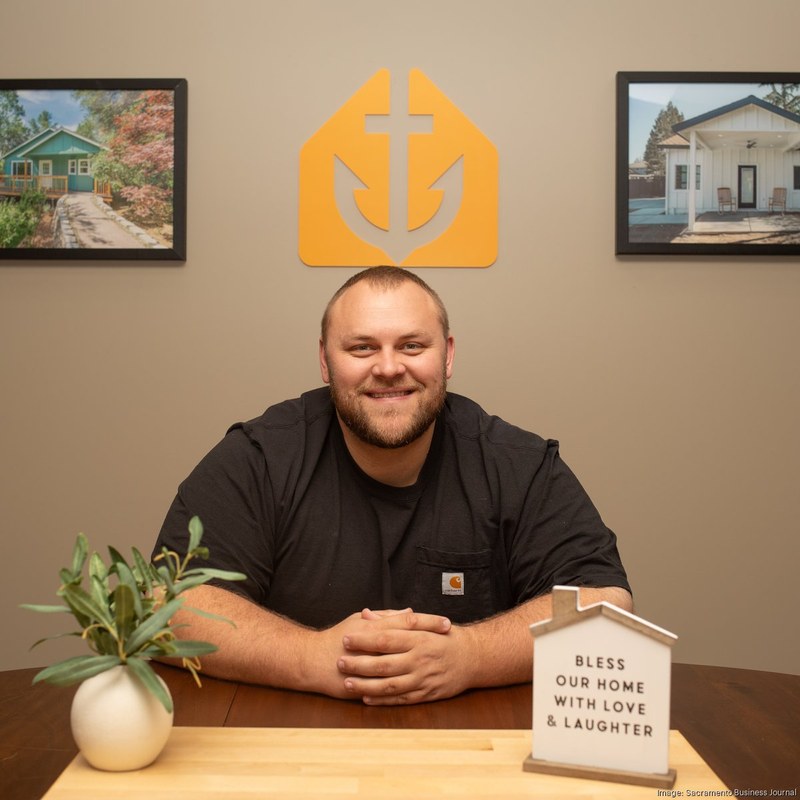
Introduction
Austin and Colton Paulhus, the brothers who co-founded Anchored Tiny Homes, a once-fast-growing Fair Oaks, California builder of backyard accessory dwelling units, each face 35 felony counts filed by the Sacramento County District Attorney’s Office: 33 counts of diversion of construction funds, one count of conspiracy to commit a crime and one count of employee wage theft. Prosecutors and state regulators allege the company collected more than $1 million from customers across 13 construction projects without doing the promised work, after an investigation that drew more than 200 consumer complaints across 18 California counties. Colton Paulhus appeared by Zoom for his arraignment on Oct. 9, 2026, and his brother turned himself in to the Sacramento County Jail the same day; both appeared in court on Oct. 14 without entering pleas, and the case returns to court Jan. 12, 2027.
Background Information
Anchored Tiny Homes launched in 2019 in Fair Oaks, outside Sacramento, marketing itself as the only accessory dwelling unit franchise on the market and selling territories across the country. Its franchising arm, Anchored Tiny Homes Franchising LLC, was co-founded by Colton Scott Paulhus, who served as chief executive; Austin Paulhus was listed as a principal of the operating company alongside their father, Scott.
The Washington State Department of Financial Institutions issued a final cease-and-desist order against Anchored Tiny Homes Franchising LLC and Colton Paulhus in 2026 after finding violations of the state’s Franchise Investment Protection Act, including selling franchises without required disclosure documents.
By mid-2024, customers in the Sacramento area and the Bay Area reported that their ADU projects had stalled, that subcontractors and employees were going unpaid, and the company shut down suddenly without prior notice to customers. Colton Paulhus posted a video apology in July 2024 — “I just want to kind of humbly come on here and say that I’m sorry to everybody” — and closed the business shortly afterward. The California Contractors State License Board revoked the company’s contractor license in November 2024, the most serious administrative enforcement action available to the board, after filing an accusation with the California Attorney General’s Office.
The Controversy or Incident That Led to Their Cancellation
Charged, not adjudicated. The 35 felony counts against each brother — 33 counts of diversion of construction funds, one count of conspiracy and one count of employee wage theft — are criminal charges filed by the Sacramento County District Attorney’s Office in October 2026. Neither brother has entered a plea, no trial has occurred and no conviction exists. Both dispute criminal wrongdoing, their defense calling the company’s collapse a business failure rather than a crime, and both are also seeking bankruptcy protection in federal court.
According to the felony complaint and the Contractors State License Board, which investigated the case alongside the Sacramento County District Attorney’s Office, the brothers billed customers and received about $1,046,433 in payments across 13 separate construction projects “despite performing no work and supplying no materials.” Prosecutors allege that more than $653,000 was diverted from company accounts to expenses and activities unrelated to the construction projects. The board said its investigation was spurred by more than 200 consumer complaints from 18 California counties alleging abandoned ADU projects, unpaid subcontractors, and payments made in advance of work that was performed only in part or not at all.
The customers described in coverage include elderly residents and families building backyard homes for aging relatives. Renee Kumamoto paid $168,000 for a backyard unit for her father, who was battling cancer; the company closed less than two and a half weeks after she sent her final payment, before construction had begun. Mariah Dorn publicly accused the company of taking $266,000 from her elderly parents and leaving “a shell of a home”; Katie Lucas paid $211,000 for a project that was never finished; Janet Kaufman of El Dorado Hills said her contract was worth $222,000, and Merle Simonsma valued hers at about $300,000 — the two later telling ABC10 they lost more than half a million dollars combined. Retired nurse Jan Truelock paid more than $40,000 in January 2023 for a 450-square-foot backyard home in Roseville, spent a year looking at an empty lot, sued for breach of contract and negotiated a $25,000 settlement.
Colton Paulhus appeared virtually for his arraignment on Oct. 9, 2026, where a judge read the 35 felony counts against him: one count of conspiracy to commit a crime, 33 counts of wrongful diversion of funds and one count of willful theft of employee wages. During the same proceeding, ABC10 reported, his brother Austin turned himself in to the Sacramento County Jail on similar charges. On Oct. 14, both brothers appeared virtually before a judge without entering pleas; the judge ordered them to return to court on Jan. 12, 2027, when they are expected to appear in person.
The brothers deny criminal conduct. In a December 2024 Facebook post after the collapse, Colton Paulhus acknowledged “My last business failed. In a major way,” but wrote, “There’s nothing for me to hide. Nothing illegal was done,” blaming rapid expansion, saying “We simply grew too fast, scaled too quickly, and were not properly capitalized to support the growth.” Blair Goss, Austin Paulhus’s Sacramento-based criminal defense attorney, said in a statement to the California Post, “A business failure is not proof of a crime… The prosecution has made its accusations, but it has not yet shown us its evidence. Austin will be judged on his own conduct, not on a company’s collapse.” Goss separately told ABC10, “I do sympathize with creditors who have paid into that business and are left empty handed. It does not necessarily mean that there was fraudulent or criminal activity involved in that business failing.” Colton Paulhus’s attorney declined an interview request from ABC10.
Public Reaction and Consequences
The collapse left a trail of angry homeowners across Northern California, and several spoke out publicly as the criminal case moved forward. Dorn’s July 2024 Facebook warning — “They have scammed my elderly parents out of $266k before I stopped my mom from making another payment,” and “we are just left with a shell of a home and out of money” — described subcontractors unpaid for six months and liens filed against her family’s property. Truelock, who settled her suit for a quarter of what she paid, said, “I’m very glad they are finally held accountable,” adding that she believes prison time would be an appropriate outcome.
Speaking after the October hearings, Kaufman said she hoped the case would “send a lasting message”: “I just want the nonsense to stop with this company and any other companies that are doing this to, to all of us.” Simonsma said, “I won’t see any money. That isn’t what this is about. This is about holding someone criminally liable for what they caused.” Kumamoto, whose payment was followed by the company’s sudden shutdown, said of the timing: “This is crazy.”
Regulators also weighed in with their own consequences before the criminal case: the CSLB’s November 2024 license revocation followed an accusation filed with the state attorney general’s office, which the board described as its most serious available enforcement action, and Washington’s securities regulator issued its final cease-and-desist order against the franchising arm and Colton Paulhus in 2026.
Current Status
Each brother remains charged with 35 felony counts — diversion of construction funds, conspiracy and employee wage theft — and has not entered a plea; no trial date has been set, and the charges remain unadjudicated. They are next due in court on Jan. 12, 2027, which CSLB describes as a settlement conference hearing and the judge has said they should attend in person. The Sacramento County District Attorney’s Office declined to comment on the pending case. Both brothers are seeking bankruptcy protection in federal court, which will shape any civil recovery for the homeowners left with unfinished projects; both maintain that nothing criminal occurred, and each is presumed innocent unless proven guilty.
Impact on Their Career/Life
The felony charges ended what had been a fast-rising franchise story: a family business that launched in 2019 and sold territories nationwide became a defunct company with a revoked license, a Washington franchise cease-and-desist order against its CEO, and criminal charges over roughly $1 million in customer payments — with more than 200 complaints from 18 counties anchoring the public record. For California’s ADU industry, the CSLB used the case to warn homeowners that down payments on home improvement contracts should never exceed $1,000 or 10 percent of the project’s total cost, whichever is less, and that progress payments cannot exceed the value of work actually performed. The bankruptcy proceedings and the criminal case now move on parallel tracks while the homeowners await an outcome neither track guarantees.
Sources
- “NY Post: Anchored Tiny Homes founders charged in $1M backyard ADU scam” source
- “CSLB: Former Contractors Behind Anchored Tiny Homes Face 35 Felony Charges” source
- “KCRA: Anchored Tiny Homes co-founders face 35 felonies in Sacramento County” source
- “ABC10: Anchored Tiny Homes CEO faces 35 felony charges in Sacramento County” source
- “ABC10: For the first time, Anchored Tiny Homes defense responds as criminal case moves forward” source
- “WA DFI: In re Anchored Tiny Homes Franchising, LLC and Colton Scott Paulhus — Final Order” source