Brittney Brown
Introduction
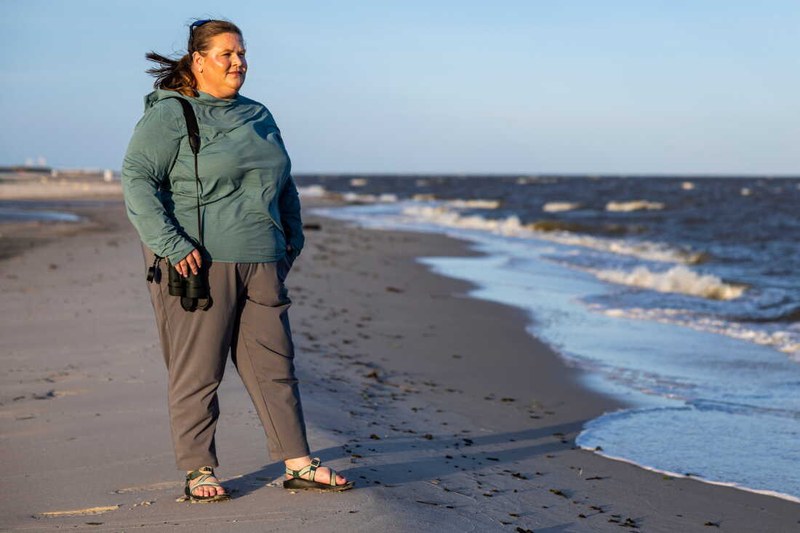
Brittney Brown is an American wildlife biologist who was fired from the Florida Fish and Wildlife Conservation Commission in September 2025 over a social-media post about conservative activist Charlie Kirk made after his shooting death. Brown, who had spent roughly seven years at the state agency studying shorebirds and seabirds, had reposted a meme from a satirical whale-themed account on her personal Instagram account. After the right-wing influencer account Libs of TikTok highlighted her and called for her firing, she was dismissed the next day, according to her lawsuit. She sued with the help of the ACLU of Florida, arguing the state had retaliated against her First Amendment-protected speech, and in May 2026 she signed a $485,000 settlement covering backpay, damages and attorney costs. Hers is one of the cancellation cases that ended not in the subject’s disappearance but in a public settlement and a return to her field.
Background Information
Before her termination, Brown worked for Florida’s Fish and Wildlife Conservation Commission for about seven years, according to court documents. She studied shorebirds and seabirds on the Florida panhandle, and bird conservation was her research specialization. That specialization later became central to her legal case: the state agency that fired her was also the regulatory body for her research field, and Brown said in her lawsuit that she struggled to find other work after the firing for precisely that reason. Beyond her scientific career, little about Brown’s personal background was reported in the coverage of her case; the dispute was entirely about a single post on a personal account, with no allegation of wrongdoing beyond it.
The Controversy or Incident That Led to Their Cancellation
The incident began with a repost. On 10 September 2025, Charlie Kirk, the conservative activist and founder of Turning Point USA, was shot dead during a public appearance at a Utah university campus, and his supporters combed social media in the days that followed for posts they viewed as celebrating his death. Brown reposted a meme from a satirical account that pretends to be a whale. Addressing Kirk’s critics, it stated: “they care exactly as much [about the shooting of Kirk] as charlie kirk cared about children being shot in their classrooms, which is to say, not at all.” The Guardian described the meme as claiming Kirk would not care about children being shot in their classrooms. The post was made on Brown’s personal Instagram account; she has said she still does not know who screenshotted her Instagram story or how it ended up on Libs of TikTok’s account. The screenshot made its way to the influencer account, which then posted about her, setting off the sequence that cost Brown her job.
Public Reaction and Consequences
Libs of TikTok, the right-wing influencer account spearheaded by Chaya Raichik, highlighted Brown and called for her firing; according to her lawsuit, she was fired the next day. Brown said someone then alerted Libs of TikTok about her termination only about 10 minutes after it happened and before it was made public. The state’s justification for the firing came under scrutiny in court: Brown’s former supervisor, habitat and species conservation director Melissa Tucker, had claimed that Brown’s post generated hundreds of formal complaints and caused significant disruption, and an agency official told the court it had received “hundreds of citizen contacts and multiple media inquiries.” Discovery in the case later revealed the agency had received only about 50 complaints, and US District Judge Mark Walker imposed sanctions against Tucker for exaggerating the figure and then failing to correct the record. Brown, represented through her lawsuit by the ACLU of Florida, sought reinstatement. Carrie McNamara, an attorney with the ACLU of Florida, called her eventual settlement “a hard-won vindication,” adding: “The First Amendment does not disappear when someone accepts a government job.”
Current Status
Brown’s case ended in a settlement. On 21 May 2026, reported the following day, she signed a $485,000 settlement agreement with agency directors that covers backpay, damages and attorney costs. As part of the deal, she agreed not to seek future employment at the agency. Fish and Wildlife officials did not immediately respond to a request for comment around the settlement. NPR reported in June 2026 that Brown has another job now and continues to work with seabirds and shorebirds, though she told the network she had really wanted her old job back: “I know that sounds insane, but I loved what I did,” she said. “I would gladly have gone back to it.” She has also returned to speaking out on social media, addressing the unknown person who screenshotted her story: “but I want them to know that they lost. I won. I can speak out now. And you didn’t shut me up forever.”
Impact on Their Career/Life
The firing cost Brown a career she had built over about seven years and, for a time, nearly her profession: she told the courts she could not easily find other work because the agency that dismissed her regulated her own research specialization. The $485,000 settlement was among the largest known payouts in the wave of litigation that followed the Kirk firings; Reuters counted more than 600 people fired, suspended or investigated over statements about Kirk’s death, and Brown’s was one of the resolved First Amendment retaliation cases against a public employer. But the settlement also closed the door on the outcome she said she wanted most — returning to the job itself — since she agreed never to seek employment at the agency again. “That was all I wanted this entire time,” she told NPR. “And if we couldn’t have that, then I at least wanted to send the message that you can’t get away with stuff like this.” Her case stands as an example of a cancellation that was fought to a monetary and legal conclusion, with the sanctioned official, the documented gap between the agency’s claims and the actual complaint count, and the settlement itself all becoming part of the public record.