Guo Degang
Introduction
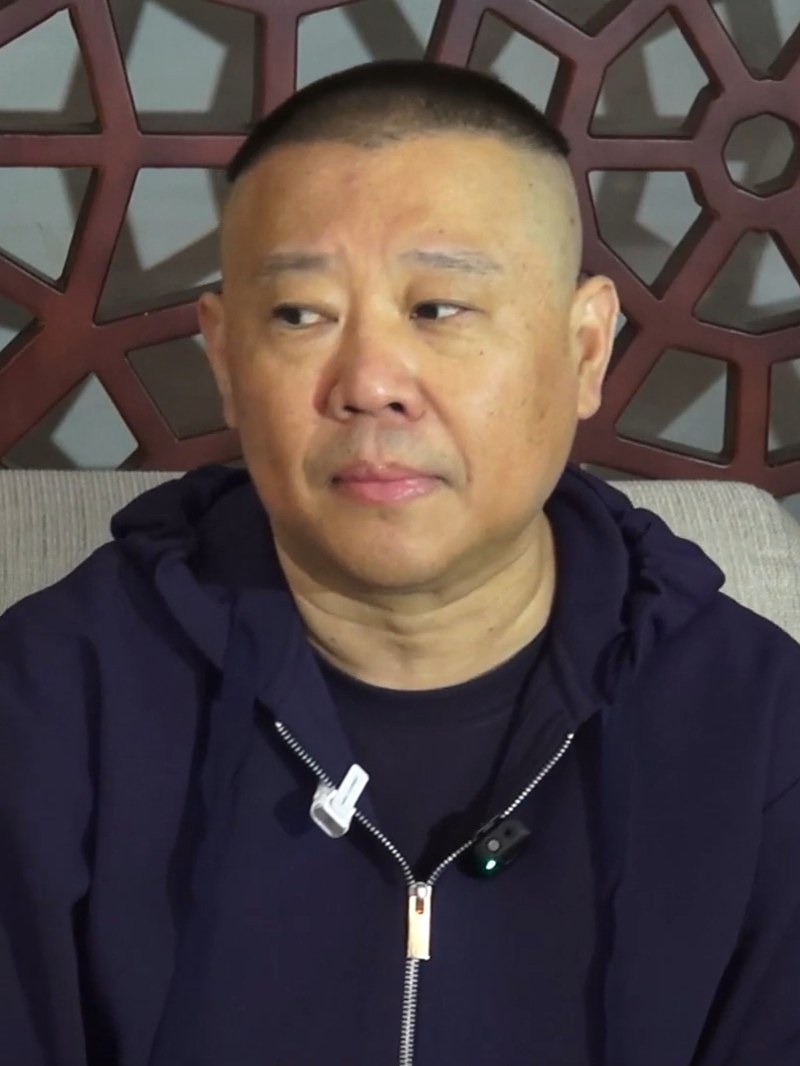
Guo Degang is China’s best-known comedian and one of its most influential cultural figures, a household name credited with reviving xiangsheng, the traditional art of crosstalk comedy built around dialogue, wordplay and verbal sparring. In the summer of 2026, the veteran performer was placed under investigation by authorities in Wuhan after he improvised an altered lyric to a famous revolutionary song during a show at the end of July, and performances on his nationwide tour were cancelled. The Wuhan Culture and Tourism Bureau, which received a complaint about the gag, said the adapted portion of the song was suspected of violating China’s Regulations on the Administration of Commercial Performances, and in September it fined both the company hosting his show and the theatre that staged it. Guo’s troubles underscore the delicate line comedians must tread in highly censored China, especially as the ruling Communist Party steps up its ideological drive.
Background Information
Guo is considered the country’s most prominent performer of traditional xiangsheng, and the complaint that ensnared him arrived at the height of his mainstream success. He had been on a nationwide tour celebrating his theatre group’s tenth anniversary when he played the Wuhan show at the end of July 2026. Along with several renowned Peking opera artists, he founded the Qilin theatre company to help promote lesser-known traditional Chinese art forms to a broader audience. The troupe’s flagship Deyunshe theatres were still operating in Beijing when an Associated Press photographer pictured one on August 22, 2026, as the investigation unfolded.
The Controversy or Incident That Led to Their Cancellation
The song at the center of the case, “Playing my beloved pipa,” is said to capture the resilient spirit of communist guerrilla forces fighting the Japanese during the Sino-Japanese war. It was featured in the famous 1950s Chinese movie “Railroad Guerrillas,” and in 2019 it was one of 100 songs chosen to celebrate the 70th anniversary of the founding of the People’s Republic of China. The original lyrics are: “The sun is about to set in the west; all is quiet on Weishan lake.” Guo adapted the second part to instead say “all is quiet in the Forbidden City,” and performed the song in a comedic style. According to CNN, the mention of the Forbidden City — the sprawling palace complex in the heart of Beijing that served as the seat of power for China’s imperial rulers for hundreds of years — could be politically sensitive in China because of its close historical association with whoever is in power.
A complainant reported the performance to the Wuhan Culture and Tourism Bureau, writing in a letter published by state-affiliated media thePaper that Guo had “not only distorted and vulgarized a classic revolutionary work, but also violated public morals and accepted standards of conduct.” The bureau said that “the adapted portion performed by Guo Degang was not included in the materials submitted for prior approval and is suspected of violating the Regulations on the Administration of Commercial Performances.” Chinese state media previously reported that Guo’s performance itself had been approved in advance by the Wuhan authorities, but the lyric change was not, and that he used “mocking words” at the end of the song.
Public Reaction and Consequences
The fallout reached his schedule almost immediately. CNN learned that some of Guo’s later performances had been cancelled, and at the Xi’an Chanba Poly Grand Theater, where he had been due to perform that week, a worker said, “There is no date or plan for a possible return. Ticket holders will be refunded automatically.” News that the beloved star was under investigation became one of the most discussed topics on Chinese social media, and opinion divided. Some internet users argued he should be punished for altering red — that is, communist — songs, with one writing that “art is to serve the people, if people don’t like it then please do not make such art,” though others on China’s tightly censored platforms suggested officials were being “oversensitive.”
The case fit a familiar pattern of shrinking space for performers. Three years earlier, stand-up comedian Li Haoshi was fined 14.7 million yuan ($2 million) over a joke using a phrase associated with the People’s Liberation Army, then banned from performing indefinitely; in 2022, comic Li Bo was fined 50,000 yuan ($7,400) for joking about Shanghai’s Covid-19 lockdown. The episode, Malay Mail observed, highlights the narrow boundaries faced by performers in China, where entertainment and media remain subject to close political and regulatory scrutiny.
Current Status
In mid-August, the Wuhan Culture and Tourism Bureau confirmed to CNN that its investigation into Guo was ongoing, adding that it did not know when the results would be announced; CNN said it had reached out to Guo for comment. The newest development came on September 7, when the Associated Press reported that the bureau had found Guo “distorted” a patriotic song and caused a “negative impact” on society. It fined the company hosting Guo and the theatre for violating rules on commercial performances, and said it would “deal seriously” with relevant personnel, without specifying what those punishments would entail. In its statement announcing the fines, the bureau declared that “Revolutionary songs carry the memory of the Chinese nation’s War of Resistance and the feelings of the people. No organization or person can be allowed to distort or misrepresent them.” Guo has not performed in public since the incident, and his troupe’s social media page has stopped updating; he did not immediately respond to a request for comment.
Impact on Their Career/Life
For a performer whose standing rested on sold-out theatres and a revived traditional art form, the consequences have been swift and material: a tenth-anniversary national tour cut short, cancelled dates with automatic refunds, fines against his host company and the venue, and an official finding that his joke distorted a patriotic song and negatively affected society. Whatever follows, the regulator’s statement that it will “deal seriously” with relevant personnel leaves open the possibility of further punishment for people around him, and his prolonged absence from the stage and social media marks an abrupt freeze for one of China’s most commercially reliable entertainers. The affair also lands on a list of cautionary precedents — Li Haoshi’s indefinite ban, Li Bo’s fine — that together show how, in China’s tightly policed entertainment industry, a single improvised line can end even the most established career, whatever an audience found funny about it.