Amber Guyger
Introduction
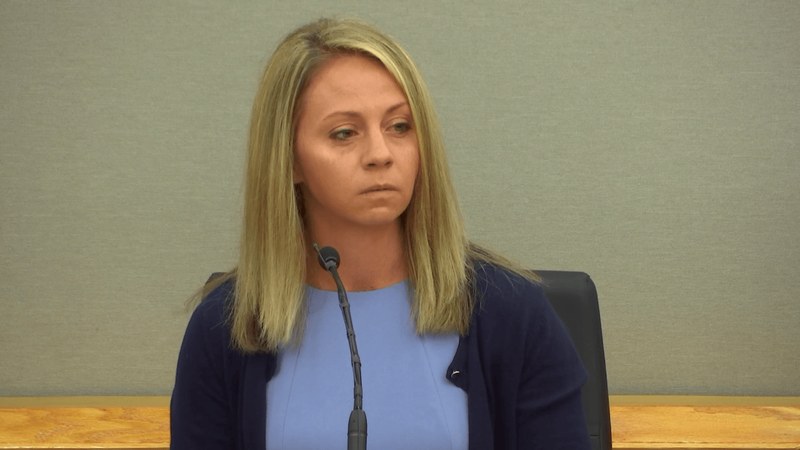
Amber Guyger is a former Dallas police officer convicted of murdering her 26-year-old neighbor Botham Jean — an accountant watching television and eating ice cream in his own living room — after she entered his apartment the night of Sept. 6, 2018, claiming she had mistaken it for her own, and was fired from the force, convicted by a jury in less than a day of deliberation in October 2019, and sentenced to ten years. On Friday, Oct. 16, 2026, she walked out of the Christina Melton Crain Unit in Gatesville, Texas, released on parole after serving seven years — three short of her full sentence — over her victim’s family’s opposition . The conviction is final — appeals denied — so this page records an adjudicated murder, not an allegation .
Background Information
Guyger, who is white, was a four-year member of the Dallas Police Department living one floor below Jean, who was Black, in the South Side Flats apartment building in Dallas. She testified that she returned after a roughly 15-hour shift, parked on the wrong floor of the garage, tried her key in what turned out to be Jean’s door, and shot him believing he was an intruder; prosecutors said the door was unlocked and pushed open, and that Jean had done nothing wrong . She was off duty but in uniform. The case became one of the most polarizing police shootings of its era, lighting up national conversations about race and policing: a white officer had killed an unarmed Black man in his own home .
The Controversy or Incident That Led to Their Cancellation
Adjudicated: convicted of murder. A Dallas jury found Guyger guilty of murder on Oct. 1, 2019, after less than a day of deliberation, and sentenced her to ten years. Her appeals were denied; the conviction stands .
The shooting itself was brief and undisputed in its outcome: Jean, a PricewaterhouseCoopers accountant, was killed by a single shot from Guyger’s service weapon inside his own apartment. The trial turned on her state of mind — her self-defense claim of fearing a burglar against the prosecution’s case that a trained officer had gone to the wrong floor, entered the wrong home, and killed the man inside . The jury rejected the defense and convicted her of murder; the ten-year sentence itself became a fresh controversy, with Jean’s family’s attorney saying years later that the family’s frustration began with that sentence, not merely with her eventual release . At sentencing, Jean’s younger brother Brandt famously told Guyger he forgave her and asked the judge for permission to embrace her in the courtroom — a moment the Dallas Police Association would cite even in responding to her release .
The case’s afterlife kept finding her: denied parole in September 2024, when her release drew opposition from Jean’s family, the Dallas County District Attorney’s office and a petition of more than 6,300 signatures . On Oct. 1, 2026 — seven years to the day after the conviction — the Texas Board of Pardons and Paroles granted her parole, citing her satisfactory institutional record and program participation in prison .
Public Reaction and Consequences
The consequences that made her case a public reckoning were her firing and conviction; the parole added a second wave of reaction. Civil rights attorney Lee Merritt, for Jean’s family, called the decision deeply disappointing: “Botham Jean was in his own home, eating ice cream, when his life was taken. He did nothing wrong… The family still lives with this loss every day. Botham does not get to come home” . Jean’s family asked for privacy as they processed the news, days after marking what would have been his birthday . The Dallas Police Department said it had no role in the parole decision, which rests with the state board, while the Dallas Police Association pointedly recounted the conviction and Brandt Jean’s courtroom forgiveness, saying the moment “did not speak for every member of the Jean family” .
Current Status
Guyger, 38, is out of prison and will spend the remainder of her sentence under community supervision until it expires in 2029. Her conditions are strict: she may not live in Dallas County, contact Jean’s family or Dallas police officers, or leave Texas without permission, with regular check-ins, home visits and employment requirements . Her trial attorney Robert L. Rogers said before the release that she had a place to live and a job lined up, and that she remains remorseful: “She’s been remorseful. She’s stayed remorseful. She’s still remorseful” . She remains a convicted murderer whose record is permanent, serving out a verdict that no parole changes .
Impact on Their Career/Life
Guyger’s policing career ended in the criminal courthouse: fired from the department she joined four years earlier, convicted of murder, and stripped by that verdict of the self-defense claim that was her only legal shield. The parole board’s decision returns her to ordinary life three years early — work, housing, and supervision conditions in place — while Jean’s family carries the loss the system could not return, a contrast Merritt framed bluntly: accountability, he wrote, “has to mean something, for everyone,” and a release after seven years “tells grieving families that it can be cut short” . The case remains one of the era’s defining police-shooting prosecutions — a white officer sent to prison by a jury for killing a Black neighbor in his own home .
Sources
- “NY Post: Ex-Dallas cop Amber Guyger is sprung from prison after mistakenly shooting her neighbor” source
- “CBS News: Amber Guyger released from prison after serving 7 years for Botham Jean’s murder” source
- “NBC 5 DFW: Amber Guyger to be released Oct. 16 after early parole” source
- “NBC 5 DFW: Amber Guyger paroled 8 years after the murder of Botham Jean” source
- “Spectrum News: Former Dallas police officer Amber Guyger out on parole” source
- “FOX 4 DFW: Ex-Dallas officer Amber Guyger granted parole” source
- “Townhall: Former Police Officer Amber Guyger Released on Parole” source
- “NY Post tweet on Guyger’s release” source