Mike Lawler
Introduction
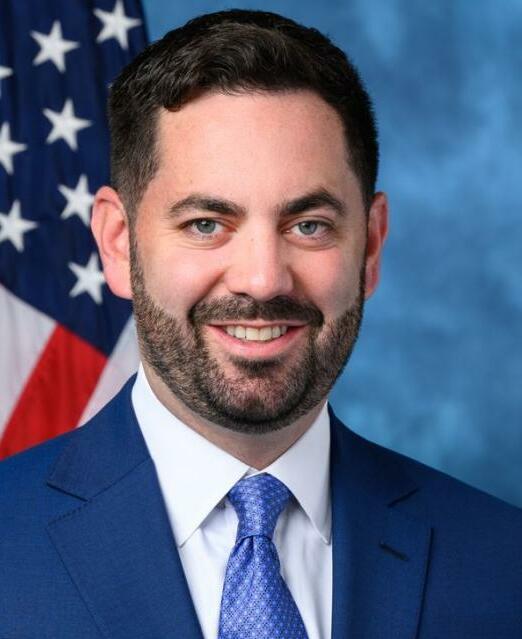
Mike Lawler is the Republican U.S. representative for New York’s 17th Congressional District, a Hudson Valley swing seat he has held since January 2023 and is defending this November against Democrat Cait Conley. On September 15, 2026, the New York Post published state police records it reviewed showing new details of his 2012 drunk-driving arrest: that he was weaving through traffic at 74 mph in a 55 mph zone with a blood-alcohol content of .14 — nearly twice the legal limit — when troopers pulled him over on the Palisades Parkway. The arrest itself was no secret: Lawler had disclosed it himself in July 2026, in a message to high-school students and a public post on X, describing it as “one of the worst decisions of my life.” What the records added was the police-level detail behind the admission, arriving with a competitive midterm race underway.
Background Information
Lawler was born September 9, 1986, in Suffern, New York, and graduated from Suffern High School before earning a bachelor of science in accounting and finance from Manhattan College, where he was valedictorian of his class. He worked his way up through New York Republican politics: special assistant to the state party chairman from 2009 to 2011, then the committee’s executive director from 2011 to 2014, campaign manager for Rob Astorino’s 2014 gubernatorial run, and co-founder of the political communications firm Checkmate Strategies in 2018. He served as deputy town supervisor of Orangetown from 2018 to 2020, won a New York State Assembly seat in 2020, and in 2022 unseated incumbent Mondaire Jones to take the 17th District House seat. His record was not spotless before the DWI story: in October 2024, The New York Times reported on resurfaced photos of Lawler in a Michael Jackson Halloween costume that included blackface at a 2006 Manhattan College party, which he called “a genuine homage to my musical hero” and said was far from his intent. He is married to Doina, has two daughters, and lives in Pearl River, New York.
The Controversy or Incident That Led to Their Cancellation
Adjudicated, not alleged. The conduct in this section was admitted by Mike Lawler himself and resolved in court: he was charged with driving while intoxicated and pleaded guilty to a reduced misdemeanor charge of driving while ability impaired, a conviction that is a matter of court record per the Post’s review of state police records. Nothing in this section rests on an unproven allegation.
The incident began in the early hours of March 17, 2012 — St. Patrick’s Day — when, per the arrest report reviewed by the Post, troopers spotted Lawler’s white Ford Escape SUV speeding northbound on the Palisades Parkway in Rockland County. The report itemized the driving: “Speeding 74 in 55 mph zone, following too closely, crossed hazard markings several times, unsafe lane change and lane change several without signals,” ending with the vehicle stopped on the exit 13 northbound ramp and blocking traffic. Lawler, then 25 and heading home from a Manhattan St. Patrick’s Day celebration, consented to a breathalyzer that recorded a blood-alcohol content of .14 against a legal limit of .08. He was charged with driving while intoxicated and later pleaded guilty to the reduced misdemeanor of driving while ability impaired. Lawler’s own account, given when he disclosed the arrest in July 2026, was that he got behind the wheel after learning his father’s cancer had spread to his brain; he called it “one of the worst decisions of my life” and said he was grateful no one was hurt.
Public Reaction and Consequences
The immediate legal consequence came in 2012: the DWI charge, the guilty plea to the reduced DWAI misdemeanor, and whatever sentence accompanied it. The political consequence arrived in two waves. In July 2026, Lawler pre-empted the record himself — telling students at Nanuet High School during a road-safety talk that “it was not my proudest moment… I could’ve killed myself or someone else,” and posting his admission publicly on X. In September, the Post’s records story put the stop’s specifics — the speed, the weaving, the .14 reading — into circulation during his reelection campaign, and the timing did not go unnoticed: the disclosure surfaced months out from a November race that both parties view as pivotal to House control. His congressional office did not immediately respond to the Post’s request for comment. There was no denial to react to — the story’s hook was the gap between what Lawler had admitted and what the police record showed, not a dispute over the facts.
Current Status
As of September 15, 2026, Lawler remains the sitting representative for NY-17 and an active candidate for reelection, facing Cait Conley in November. The 2012 case itself is long closed — resolved by a guilty plea to the reduced misdemeanor more than a decade ago — and no new legal action arises from the records’ publication. The open question is political, not legal: whether the granular details change the calculus in a district where his seat was decided by around six points in 2024 and is again rated a toss-up. His office had not commented when the Post went to press, and no resignation call, censure effort, or party sanction had been reported in the fetched coverage as of the same date.
Impact on Their Career/Life
The DWI has become a fixed part of Lawler’s public biography, invoked by him rather than hidden: the road-safety talk to high-school students, the public post, the “there is never a justification to drive impaired” framing recorded in his Wikipedia profile. That transparency blunted the immediate damage in July — an admission on his own terms tends to read differently than an exposure — but the September records narrowed that control, converting a self-told story of a bad night into a police document with mile-per-hour and blood-alcohol specifics that opponents can quote. For a congressman whose 2026 posture includes positioning on road safety and whose margin for error runs through persuadable suburban voters, the combination of an admitted conviction, resurfaced details, and a live midterm race makes this a story that will be cited until the votes are counted — one he has largely already conceded the facts of, and now has to outlast.