Sean Higgins
Introduction
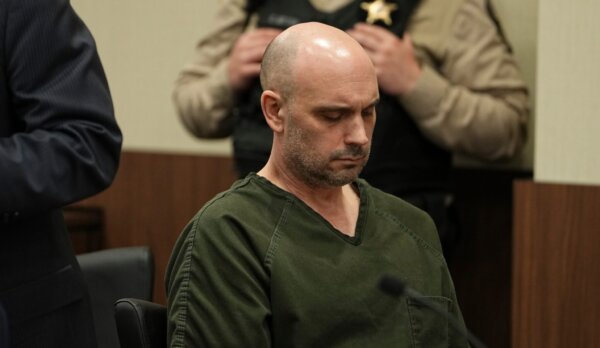
Sean Higgins is the New Jersey man charged with killing NHL star Johnny Gaudreau and his brother Matthew, both married fathers run down from behind while cycling on a rural South Jersey road in August 2024. Higgins, a 45-year-old Army veteran, has sat in the case’s long pretrial phase disputing the charge at its core — that he was drunk behind the wheel — while rejecting every plea deal prosecutors offered. That posture cracked on October 19, 2026, when his own lawyer conceded in court that a defense-commissioned test of Higgins’ blood came back at .08, right at New Jersey’s legal limit, moments before Higgins turned down a final offer that would have resolved the case for 28 years in prison and left him facing up to 91.5 years at trial.
Background Information
The Gaudreau brothers were cycling on a road in Oldmans Township, Salem County, on the evening of August 29, 2024, returning from their sister’s wedding rehearsal dinner — she was to be married the next day. Johnny Gaudreau, 31, was about to begin his third season with the Columbus Blue Jackets after eight seasons with the Calgary Flames; Matthew Gaudreau, 29, had played at Boston College and was working as a high school hockey coach. Prosecutors say Higgins was driving his Jeep Grand Cherokee while under the influence when he struck and killed both men; he was indicted on six counts, including two of first-degree aggravated manslaughter and two of second-degree vehicular homicide. According to court documents, his blood was drawn at a hospital that night and measured at .087 percent, just above New Jersey’s .08 legal limit.
The Controversy or Incident That Led to Their Cancellation
Charges, pending trial. Higgins has been indicted but not tried. The account below comes from court proceedings and statements by prosecutors and defense counsel as reported in news coverage; an indictment is an accusation, not proof, and Higgins is presumed innocent unless and until a court rules otherwise. Nothing here has been adjudicated, and the defense has not conceded recklessness — only, now, the blood-alcohol reading itself.
For most of the case’s life, the fight was over the number. Higgins’ defense, led by attorney Richard Klineburger, argued that the .087 result was unreliable because forensic staff had tested the serum portion of his clotted blood sample rather than whole blood — a method the lawyer said could read roughly 16 percent high absent a proper conversion — and that a defense-hired toxicologist put the true figure at .075, below the limit. The defense moved to dismiss the indictment over the testing, claiming a “half-truth” had been presented to the grand jury; on May 11, 2026, Judge Michael Silvanio declined, finding no intentional misleading, and Assistant Prosecutor Michael Mestern told the court there were “no half-truths” in what the grand jury heard.
Then the argument collapsed from the defense’s own side. At an October 19, 2026 hearing, Klineburger acknowledged that when the defense had Higgins’ blood tested independently — using what he called the “non-tainted tube” — the result came back at .08: “It did come back, based upon the non-tainted tube, it came back as a .08, as opposed to .087,” the lawyer said, still suggesting a slightly lower reading than the prosecution’s. That concession landed minutes before the decision of the day: Higgins rejected the prosecution’s final plea offer — guilty pleas to two counts of aggravated manslaughter and a first-offense DWI count in exchange for 28 years in prison, 85 percent of which he would have to serve under New Jersey law. The defense had floated an 11-year counteroffer that prosecutors rejected, and it was the second offer Higgins has refused, after turning down a 35-year deal earlier in the case.
Judge Silvanio questioned Higgins at length to confirm he understood what rejecting the deal meant, and Higgins answered “Yes, sir.” The judge told him that a conviction at trial on the current counts — reckless vehicular homicide and aggravated manslaughter — would expose him to a maximum of 91.5 years, with no parole eligibility until roughly 68 years were served, and that any plea from now on would be an “open plea” carrying no sentencing promise. The hearing also aired the defense’s trial themes: newly released photos of the brothers’ mangled bicycles and Higgins’ banged-up Grand Cherokee, and defense-drawn schematics that Higgins’ team says cast doubt on whether he was reckless when he struck them. His team has suggested the brothers contributed to their own deaths by riding in the middle of the road without the lights state law requires after dark — arguments the prosecution contests and no court has accepted.
Public Reaction and Consequences
The case has been a national story since the night of the crash, shadowed by who the victims were: a 31-year-old NHL winger at the peak of his career and the younger brother who coached high-school hockey, both killed on the eve of a family wedding. Coverage of the pretrial fight has focused on the unusual defense strategy — contesting the blood-alcohol chemistry while suggesting the victims shared blame for their own deaths — and, after October 19, on the sight of the defense conceding the very number it had spent a year attacking. The documented consequences in Higgins’ own life are the six-count indictment, the collapsed dismissal bid in May 2026, and the pile of rejected pleas: 35 years refused, then 28 years refused, each rejection moving him closer to a trial whose ceiling, on the same evidence, is more than three times the last offer.
Current Status
As of October 19, 2026, Higgins has rejected the prosecution’s final offer and stands charged and awaiting trial: jury selection begins in the first two weeks of December 2026, with opening statements scheduled in early January and a trial date of January 4, 2027. If he pleads guilty at all, it will be an open plea with no agreed sentence; if he is convicted, the sentencing range tops out at 91.5 years with parole eligibility only after 68. Nothing has been adjudicated — no verdict has been returned on any count.
Impact on Their Career/Life
Higgins was a working 44-year-old Army veteran when the brothers were killed; the two years since have made his name permanently synonymous with theirs. His litigation strategy — attacking the blood test, blaming the road position of two men who died — preserved his defense but cost him the 28-year resolution that was on the table twice, and the .08 concession from his own testing removed the factual centerpiece of that strategy days before jury selection. He now heads to trial facing a maximum term measured in decades beyond a human life expectancy, with the Gaudreau family — denied a plea and the certainty of a sentence — set to re-live the crash in open court.
Sources
- New York Post, “NJ driver accused of killing hockey star Johnny Gaudreau, bro makes stunning concession,” October 19, 2026 — source
- Court TV, “Driver charged with killing hockey’s Gaudreau brothers turns down plea deal,” October 19, 2026 — source
- ABC7 New York (WPVI), “After crash kills Matthew, Johnny Gaudreau brothers, trial of Sean Higgins will proceed; judge denies request to dismiss charges,” May 11, 2026 — source