Fausto Isidro Meza Flores
Introduction
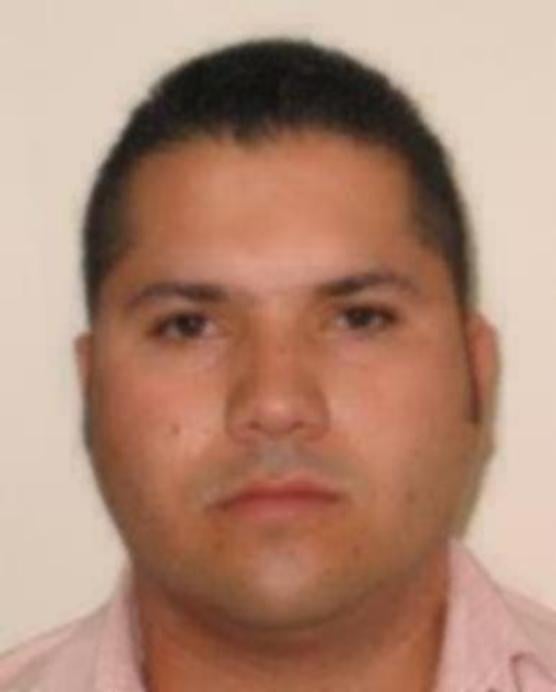
Fausto Isidro Meza Flores, the Sinaloa drug trafficker known as “Chapo Isidro,” was captured by the Mexican Army on the night of Friday, November 20, 2026, in Guasave, Sinaloa — the reported end of a manhunt that spanned more than a decade and put him on the FBI’s Ten Most Wanted Fugitives list with a $5 million reward on his head . US prosecutors charge that the alleged leader of the Meza-Flores Transnational Criminal Organization, indicted in Washington in 2012, flooded the United States with heroin, methamphetamine, cocaine, fentanyl and marijuana . His capture triggered a night of gun battles, roadblocks and burning trucks across Sinaloa that suspended a professional baseball game and sent residents running for cover .
Background Information
Mexican reporting traces Meza Flores, born in Guasave in 1982, from the orbit of Amado Carrillo Fuentes and the Beltrán Leyva brothers to his own organization — known as Los Mazatlecos, the Guasave cartel and the Meza-Flores Transnational Criminal Organization — after the Beltrán Leyva–Sinaloa split of 2008 . A federal grand jury in the District of Columbia indicted him on May 2, 2012; a superseding indictment and federal arrest warrant followed on November 26, 2019, on multiple counts of drug-trafficking violations and use and possession of a firearm, and the FBI later added him to its Ten Most Wanted Fugitives list . The 2012 indictment, still the operative US case, alleges conspiracy to distribute five hundred grams or more of methamphetamine, five kilograms or more of cocaine, one kilogram or more of heroin and one thousand kilograms or more of marijuana for importation into the United States, alongside the firearm count . US officials describe his organization as “heavily armed and violent,” allegedly responsible for gun battles, kidnapping, murder, torture and extortion to hold its territory, and for killing law enforcement officers and members of rival cartels in Sinaloa; a 2013 Treasury statement described its “extremely violent territorial war” with the Sinaloa cartel then led by Joaquín “El Chapo” Guzmán . By 2026, security sources described him to El País as Sinaloa’s principal drug exporter, having expanded while the Guzmán and Zambada factions bled each other in a two-year war; the Navy’s late-2024 seizure of more than a ton of fentanyl in Guasave — the largest in Mexican history — took place inside his bastion .
The Controversy or Incident That Led to Their Cancellation
Charged, not convicted. Meza Flores faces unadjudicated US federal trafficking and firearm counts. The capture was attributed to security-cabinet sources by several outlets, but it had not been confirmed in an official announcement at publication time, and Mexican authorities had not detailed his legal status.
Army special forces took Meza Flores in Guasave on Friday night, according to security-cabinet sources cited by Mexican press, which also reported that members of his inner circle were detained in the operation . CNN reported the arrest as attributed to Mexican media while stating it was seeking independent confirmation from Mexican authorities . Sinaloa’s Public Security Secretariat reported an attack on federal personnel in Guasave and told residents to stay indoors and off the roads; two low-flying military helicopters appeared in shared video to spray bullets at suspected traffickers in what the New York Post described as a residential area, and CNN-verified imagery appeared to show helicopters firing at ground targets in the city . Residents hid through the fighting; blockades tied up highways, trucks were set alight, and a Guasave resident told CNN that armed individuals had taken over private hospitals and that businesses including convenience stores and gas stations were burning . The violence reached a Mexican Pacific League game at Guasave’s Kuroda Park: with the Algodoneros de Guasave playing the Venados de Mazatlán, popping gunfire rang across the field, players sprinted for the dugouts and fans fled the stands, the commentators paused the broadcast citing a “national security situation,” and the league canceled the remainder of the game while confirming none of the fighting took place inside the stadium .
Public Reaction and Consequences
Sinaloa’s interim governor, Graciela Domínguez Nava, urged residents to shelter and said the state government was monitoring the federal operation in the center-north of the state; El Universal likened the night of violence to the 2019 “culiacanazo,” the cartel’s armed response to an earlier capo’s arrest . The manhunt’s long price tag was public record: the State Department’s Narcotics Rewards Program had offered up to $5 million for information leading to his arrest and conviction, a bounty the FBI displayed on its Ten Most Wanted page until the capture ended it . Security journalists who broke the news of the capture noted that the US Treasury had been targeting Meza Flores since 2013 and called his detention a major blow for Washington .
Current Status
As of publication, Meza Flores was reported in the custody of Mexican security forces and expected to be transferred to prosecutors in Mexico City, with Mexican reporting indicating he would be placed at the disposal of FEMDO, the specialized organized-crime prosecutor’s office of the FGR . Neither Mexico’s Defense Secretariat nor federal officials had publicly confirmed the arrest at publication time, leaving the reports resting on security-cabinet sources . On the US side, the 2012 indictment and 2019 superseding indictment and arrest warrant in the District of Columbia remain the operative charges, and no extradition request or proceeding had been announced .
Impact on Their Career/Life
Fourteen years of evasion ended in Meza Flores’s home municipality, where his organization’s bastion had already produced the largest fentanyl seizure in Mexican history; El País placed the capture alongside the Army’s February operation against CJNG leader Nemesio Oseguera, “El Mencho,” among the headline blows of the government’s push against the cartels . The trajectory the FBI alleges — from a $5 million listed fugitive accused of arming a “heavily armed and violent” trafficking organization to a defendant facing decades-old federal counts — now moves from a wanted poster to whatever courtroom Mexico City, and possibly Washington, provides next .
Sources
- New York Post, “FBI’s ‘Most Wanted’ cartel kingpin ‘Chapo Isidro’ captured in Mexico military operation — sparking gunfight” — source
- FBI, “Fausto Isidro Meza-Flores” (Ten Most Wanted Fugitives) — source
- El País, “Detenido El Chapo Isidro en un operativo que desata el terror en Sinaloa” — source
- El Universal, “Captura del ‘Chapo Isidro’ desata caos en Sinaloa: EU ofrece 5 millones de dólares por él” — source
- Infobae, “Reportan la detención de ‘El Chapo Isidro’ tras operativo armado en Guasave, Sinaloa” — source
- CNN en Español, “Capturan en México a cabecilla de un cártel que figuraba en la lista de los más buscados del FBI, según informes” — source
- @nypost, tweet of November 21, 2026 — source