Miguel Angel Urbano-Vazquez
Introduction
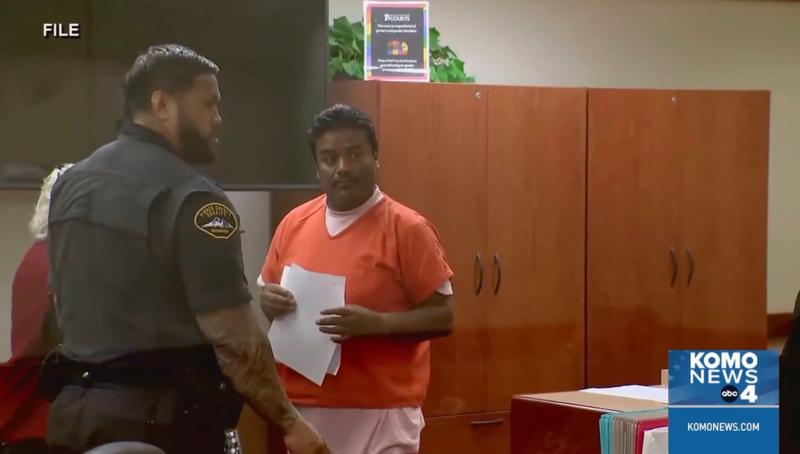
Miguel Angel Urbano-Vazquez, 50, was convicted on November 3, 2026, by a Pierce County, Washington, jury of aggravated first-degree murder for the 2002 rape and strangling of 39-year-old Sharon Van Gilder, whom he picked up at a Tacoma bar twenty-four years earlier . The same jury found him guilty of two counts of first-degree rape with a deadly weapon and second-degree rape for attacks on three other women that same year . The verdict closed a case that spent a decade cold, then another decade stalled because the suspect had been deported to Mexico, and it arrived only after the FBI arrested him in Chimalhuacán in 2023 and extradited him to Washington in 2025 . He faces life in prison without parole at a sentencing hearing set for December 11 .
Background Information
Van Gilder, a mother of two, was last seen leaving Tacoma’s Golden Rooster Tavern in March 2002 with Urbano-Vazquez and another man; hours later her body was found dumped on a county road . Between 2002 and 2012, her murder and a string of rapes went unsolved until DNA evidence linked all four cases to Urbano-Vazquez in 2012, when prosecutors charged him and a local arrest warrant issued that October . By then he had already been deported to Mexico; Pierce County detectives learned of it when investigators determined his whereabouts were unknown, and the Pierce County Sheriff’s Office asked the FBI for help locating him in 2018 . The FBI arrested him without incident in Chimalhuacán, Estado de México, on March 14, 2023, and he was extradited to Pierce County to face trial in May 2025 . He was booked into the Pierce County Jail and arraigned May 16, 2025, where a plea of not guilty was entered on his behalf and he was ordered held without bail .
The Controversy or Incident That Led to Their Cancellation
Convicted. A Pierce County jury found Urbano-Vazquez guilty on every count on November 3, 2026 — aggravated first-degree murder, two counts of first-degree rape with a deadly weapon, and second-degree rape. The 2002 conduct described below was adjudicated by that verdict, and his sentencing hearing is pending.
Prosecutors told jurors that in a span of about six and a half months in 2002, Urbano-Vazquez picked up women who were battling addiction or homelessness or just looking to party, often with other men participating . Van Gilder was the first victim: she left the Golden Rooster Tavern with Urbano-Vazquez and another man in March 2002 and was found hours later, naked and covered in injuries, with his DNA inside her . That June, prosecutors said, he picked up a 34-year-old homeless woman hitchhiking toward Seattle, drove her to a set of garages on South Thompson Avenue, hit her over the head with a heavy wrench and raped her while she bled . In August, a 29-year-old Hilltop woman got into a vehicle with Urbano-Vazquez and two other men who drove her to the same garage, where all three participated in the rape . In October, he and a younger man picked up a 40-year-old woman leaving a Pacific Avenue bar, held a curved knife to her throat and took turns raping her in a nearby alley .
The case against him rested on DNA and on the testimony of the three surviving victims. Black hairs found on Van Gilder’s body and swabs from sexual-assault examinations of two other victims were tested at a state crime lab and found to carry the same DNA profile; a Tacoma detective then sent in a fourth victim’s swab, which matched . More than twenty years after the attacks, the surviving victims took the stand and recounted hours of captivity and being raped by multiple men, testimony Van Gilder’s family credited with securing the conviction . Defense attorney David Katayama of the Public Defense Conflict Office spent his closing argument pointing to inconsistencies between the women’s trial testimony and statements they gave investigators decades earlier, and cautioned jurors that DNA evidence could not tell them anything about consent . Deputy prosecuting attorney Robert Yu urged jurors to weigh time and memory, telling them “time did not erase the evidence” in the victims’ minds, the DNA, the photographs, the medical records or the police reports . A jury of nine women and three men deliberated part of Monday afternoon and a short time Tuesday morning before convicting him on all counts, with Pierce County Superior Court Judge Alicia Marie Burton reading the verdict .
Public Reaction and Consequences
Van Gilder’s cousin, Brenda Doty, pumped her fist in the gallery as the verdict was read and later said she was feeling “that justice has come, and that he can no longer hurt anybody else” . She told KOMO News the family was thankful “that this monster can never hurt anybody again,” and described embracing the surviving victims after their testimony: “We hugged them, told them we loved them, told them that it wasn’t their fault, and thank you for being so brave to tell their stories” . Family members had waited more than two decades through the cold case, the DNA match, the discovery that the suspect had been deported, and the extradition. “For other victims of cold cases, never give up,” Doty said at trial. “Justice will come” .
Current Status
Urbano-Vazquez was convicted of all counts on November 3, 2026, and remains in custody at Pierce County Jail on a no-bail hold pending sentencing . The aggravated first-degree murder conviction guarantees a sentence of life in prison without parole, with the sentencing hearing set for December 11, 2026 . The other men who took part in some of the 2002 attacks were never caught, according to Pierce County prosecutors . At his 2023 arrest the FBI noted the reminder that indictments contain only allegations, a caution the November 2026 verdict has since superseded for the four counts tried .
Impact on Their Career/Life
The case shows both how far DNA cold-case work can reach and how deportation removed a suspect from the reach of charges filed against him: Urbano-Vazquez was charged in 2012, but he had already been deported, and he stayed out of investigators’ sight until the FBI located him in Mexico in 2023 . The conviction came only because the crime-lab match held across four victims and because the surviving rape victims testified twenty-four years later, which Van Gilder’s family called the key to the verdict . FBI Seattle framed the extradition as a message that fugitives who flee across borders can still be brought back to face justice in the communities where they offended .
Sources
- NY Post, “Miguel Urbano-Vazquez found guilty of 2002 Sharon Van Gilder murder and Tacoma rapes after extradition from Mexico,” November 4, 2026 — source
- Tacoma News Tribune (Conrad Swanson), “Jury finds man guilty in Tacoma cold case rapes and murder,” November 3, 2026 — source
- Tacoma News Tribune (Peter Talbot), “FBI extradites 2002 Tacoma murder suspect from Mexico,” May 16, 2025 — source
- FBI Seattle, “FBI Announces Extradition of Fugitive Miguel Angel Urbano-Vazquez,” May 16, 2025 — source
- KOMO News (Lynnanne Nguyen), “Jury delivers guilty verdict in 24-year-old cold case murder of Sharon Van Gilder,” November 3, 2026 — source
- KOMO News (Lynnanne Nguyen), “‘Justice will come’: Man accused in 2002 murder, rapes on trial in Tacoma 24 years later,” October 20, 2026 — source