David Carpenter
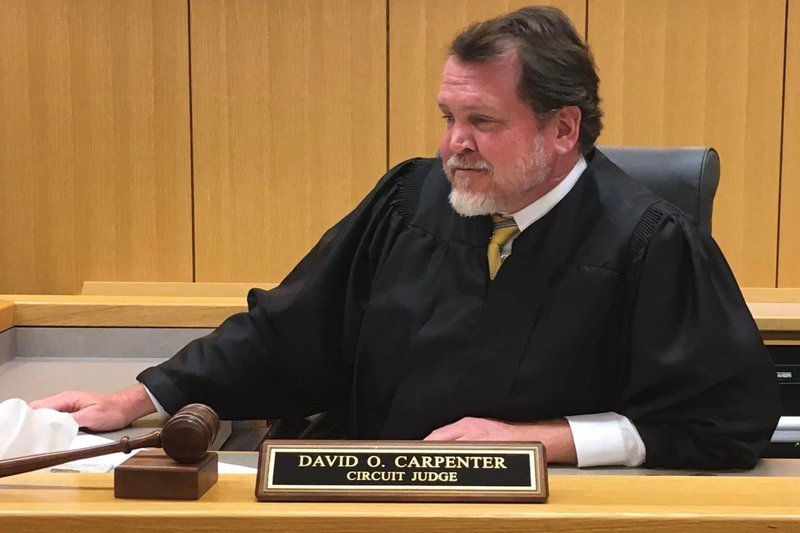
Under fire, no formal discipline. Jefferson County Circuit Judge David Carpenter faces no charges and no disciplinary action. The scrutiny on him concerns release rulings that preceded killings later charged by prosecutors — including the case of accused serial killer Damien McDaniel — and his own November 2026 Facebook posts attacking Alabama’s bail-denial law. He remains on the bench.
Introduction
David Carpenter is a Democratic circuit court judge who has presided over Alabama’s 10th Judicial Circuit, Place 5, in Jefferson County — the Birmingham area — since 2013, and who won re-election in 2024 by a wide margin. Local outlet 1819 News reported that he has described himself online as a “far left, liberal, progressive, democratic socialist.” In mid-November 2026, Carpenter drew national scrutiny when Fox News and the New York Post reported that he was under fire for rulings that put violent defendants back on the street — and that his response was to attack Aniah’s Law, the state constitutional provision that lets judges deny bail to people charged with violent crimes.
Background Information
Aniah’s Law, passed by Alabama voters in 2022, allows judges to deny bond for a list of offenses including murder, kidnapping, rape, terrorism, robbery, domestic violence and human trafficking. In November 2026, voters approved a constitutional amendment expanding the list to attempted murder, solicitation or conspiracy to commit murder, and discharging a firearm into an occupied building or vehicle. Carpenter campaigned for the bench on a promise to “reform the criminal justice system in Alabama,” saying he would work to “reduce the number of repeat offenders while addressing the expensive problem of prison overcrowding in Alabama.”
The Controversy or Incident That Led to Their Cancellation
No adjudication. Carpenter has committed no charged or adjudicated offense. The cases below are prosecutions of other men, with allegations attributed to prosecutors and police; his release rulings were exercises of judicial authority, and no fetched report records any formal sanction against him for them.
Over the weekend of November 14–15, 2026, Carpenter posted on Facebook that Aniah’s Law is “a direct assault on the Constitutional guarantee of the presumption of innocence,” asking why Americans alarmed that a Flock license-plate camera might spot their car were silent about laws that “empower the government to hold you in jail indefinitely on the basis of a charge only.” “We are all one accusation away from being a criminal defendant,” he wrote.
The posts landed while Carpenter was already Alabama’s most criticized judge for pretrial release decisions. In April 2023, he approved a plea deal for Damien McDaniel, who had been arrested in 2019 at age 17 for shooting two people in a car; after his release, prosecutors allege, McDaniel spent 14 months on a shooting spree across Alabama that left 18 people dead and more than 30 injured — what 1819 News calls one of the deadliest killing sprees in Alabama history, and what Birmingham police connect to more than a dozen murders. McDaniel is presumed innocent of those charges. Carpenter has publicly shifted blame for the release to the prosecutor’s office, though judges hold the final say.
Carpenter also granted bond to Raukeem Cunningham in a 2022 reckless-murder case involving the death of a teenage girl; while out on that bond, Cunningham was charged with fatally shooting three people at a Bessemer gas station in 2024, and his original bond was revoked. In 2019, Carpenter reportedly dismissed a 2015 rape charge against Fredrick Terrenda Hampton; two days later, Hampton met Paighton Houston, who disappeared after leaving a Birmingham bar on December 30, and whose body was found buried behind a home two weeks later after authorities determined she died of an accidental overdose. Hampton pleaded guilty to abuse of a corpse, and Carpenter sentenced him to a 20-year split term with only three years to serve in custody. Houston’s mother asked Alabama Attorney General Steve Marshall to investigate Carpenter over the release.
Public Reaction and Consequences
Fox News framed the story as a Democratic judge “facing mounting scrutiny” whose answer was to criticize the law; the New York Post amplified it nationally on November 17, and syndicated and aggregator copies spread the quotes further. The reaction has sharpened around the McDaniel timeline in particular: 1819 News, which has tracked Carpenter’s docket for years, noted that the man he freed “just months before” the alleged spree began is now the accused center of one of the deadliest killing streaks in state history, and observed that Carpenter — unlike most jurists — “remains active on social media, sharing his legal and political opinions without fear of exposing his personal biases.” His Aniah’s Law posts followed a series of posts calling on Governor Kay Ivey to commute the death sentences of everyone on Alabama’s death row.
Current Status
Carpenter remains a sitting circuit judge in Place 5, with no suspension, removal petition, or judicial-discipline action recorded in the fetched reports; the attorney general investigation Houston’s mother requested is not reported to have produced any public finding. McDaniel remains charged in the killings and is presumed innocent; Cunningham faces the 2024 gas-station charges. Carpenter, for his part, has kept posting: the weekend defense of the presumption of innocence came alongside his death-row commutation appeals, and 1819 News reported he has shifted blame for McDaniel’s release to prosecutors.
Impact on Their Career/Life
The judge who campaigned on reducing repeat offenders is now the name Alabama critics of judicial leniency reach for, and his own words made him the face of the Aniah’s Law debate just as voters expanded it — the amendment adding attempted murder and related offenses to the no-bond list passed in the same November he was calling such laws a “direct assault.” His releases — McDaniel, Cunningham, Hampton — are now routinely recounted together as a pattern, and each new charge against a former defendant renews scrutiny of a docket he has publicly declined to apologize for.
Sources
- 1819 News, “Self-proclaimed ‘Democratic Socialist’ judge calls Aniah’s Law ‘direct assault’ on constitutional rights,” November 16, 2026 — source
- Fox News (Bonny Chu), “Alabama Judge David Carpenter criticizes Aniah’s Law amid scrutiny,” November 16, 2026 — source
- NY Post, “Alabama Democratic judge David Carpenter under fire for releasing violent offenders calls bail law a ‘direct assault’ on rights,” November 17, 2026 — source
- NY Post (@nypost), X post, November 17, 2026 — source