Warren Buffett
Introduction
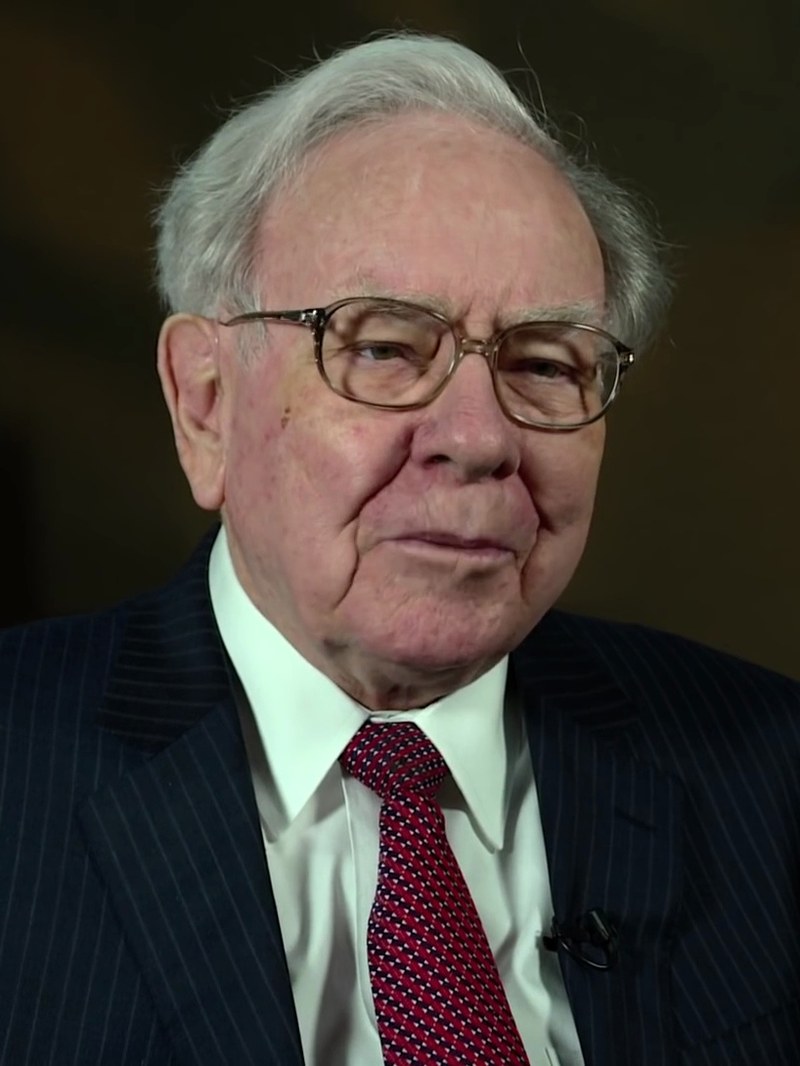
Warren Buffett — the 96-year-old investor widely regarded as the most revered figure in American business — brought his 56-year run as Berkshire Hathaway’s leader to its final form on September 18, 2026, when the conglomerate announced he had stepped down as chairman and been named chairman emeritus, effective immediately. The move, disclosed in a letter to shareholders, installs his son Howard Buffett — a Berkshire director since 1993 — as the new chairman, while the elder Buffett remains on the board. “Father Time always wins. He has, however, been generous with me,” Buffett wrote in the letter, a characteristically wry farewell to the post he had held since 1970.
Background Information
Buffett took over Berkshire Hathaway, then a failing New England textile mill, in 1965 at the age of 34, and over the following six decades transformed it into a financial and industrial juggernaut worth more than $1 trillion, with roughly 400,000 employees and $44.5 billion in operating earnings last year. He formally served as chairman from 1970, after running the company for its first five years, and his long-term strategy of buying high-quality businesses at reasonable prices delivered compound gains that outpaced the broader market and made him a trusted steward of capital. His announcement that he would eventually leave the top job first stunned thousands of shareholders at Berkshire’s annual meeting in May 2025, and he stepped down as CEO late that year, handing the reins to his longtime lieutenant Greg Abel while retaining the chairmanship.
The Controversy or Incident That Led to Their Cancellation
No allegations. Unlike most people documented on this site, Buffett’s exit from the chairmanship involves no accusation of misconduct. Every fact in this section comes from Berkshire Hathaway’s own announcements and Buffett’s letter to shareholders, and nothing here is contested by any party.
The event that ends Buffett’s half-century as chairman is a planned succession, executed in two steps. At Berkshire’s May 2025 annual meeting, he first announced he would step aside as CEO, a revelation that shocked the crowd of thousands despite his age. He handed the chief executive role to Abel, 64, late in 2025 but kept the chairmanship, and remained active in the Omaha office — Abel said in March that Buffett still came in every day and was frequently consulted. On September 18, 2026, in a letter to shareholders quoting Father Time, Buffett announced he was stepping down as chairman and moving to the chairman-emeritus role immediately; Berkshire named Howard Buffett, a director since 1993, as chairman in his place, and Susan Decker continues as lead independent director. The company said that as chairman emeritus, Buffett will remain a member of the board and “will continue to offer his valued judgment and perspective.”
Public Reaction and Consequences
The announcement closed an era with tributes rather than outrage. Abel, whose task is now to fill Buffett’s shoes fully, said in a statement that “Warren’s impact on Berkshire and its owners is without parallel in the history of American business,” adding that “the culture Warren built and the values he championed will remain at the heart of Berkshire, and Howard will be their guardian.” Buffett himself framed the choice of his son in investment terms: “Greg runs the company; Howard will guard its culture and values – both worth more than anything on our balance sheet. Think of Howard as a policy the shareholders own and hope never to claim against.” The practical consequence lands on Abel: Berkshire shares have lagged in 2026, up about 1% against an S&P 500 that rallied more than 11%, and investors are watching whether the new CEO can deploy the company’s roughly $365.5 billion cash pile as deftly as Buffett did, after stepped-up buybacks of $4.5 billion in the second quarter. In his letter, Berkshire’s most famous shareholder praised his successor — “My expectations for him were sky high from the start, and he has exceeded them” — and closed by telling shareholders he looked forward to remaining one alongside them.
Current Status
As of September 18, 2026, Buffett holds the title of chairman emeritus of Berkshire Hathaway, a role he assumed immediately and one that keeps him on the board of directors. He remains engaged despite his age: in July he told CNBC he was the driving force behind Berkshire’s roughly $10 billion June purchase of Alphabet stock — now the company’s third-largest holding behind Apple and American Express — and he joked in his farewell letter about celebrating his 96th birthday with family, including a great-grandchild “who had just turned one. He’s moving a bit faster than I am these days.” He has also acknowledged his physical limits, revealing in the July interview that he had broken his leg a few weeks earlier but was recovering, and writing in a Thanksgiving letter to shareholders, “To my surprise, I generally feel good. Though I move slowly and read with increasing difficulty, I am at the office five days a week.”
Impact on Their Career/Life
The step-down does not end Buffett’s career so much as complete its long arranged exit: the man who built Berkshire from a failed textile mill into a trillion-dollar company is now, for the first time since 1970, neither CEO nor chairman of it. Abel described the role Buffett is leaving as “the best job in the world” — the job Buffett himself called the best in American business — and the transition to Howard Buffett as culture-guardian formalizes the succession the chairman spent years engineering. His letters to shareholders, long an event in the investing world, now read as valedictions; his final line as an officer — “The company is in excellent hands, and I look forward to remaining a shareholder alongside you” — reframes him from steward to fellow owner. For the public, the departure severs the last living link between Berkshire’s identity and the Omaha investor whose name became shorthand for the company itself, ending a 56-year run as the most closely watched executive in corporate America.